Choosing a wire harness cable assembly manufacturer in 2026 is more than comparing catalog prices. Buyers must match build quality to real operating conditions. A harness routed through a vibrating machine faces different demands than one installed inside a climate-controlled cabinet. That distinction matters. This guide introduces leading manufacturers and explains how to assess their engineering depth, production controls, and customer support. It also considers practical evidence: sample inspection records, connector compatibility, wire specifications, labeling, and the ability to manage design changes. Those details often reveal more than polished product pages.
When reviewing suppliers, compare certifications and test methods against the project’s actual requirements, rather than treating a badge as proof of fit. Ask how the company handles crimp-height checks, continuity testing, incoming material controls, and production traceability. Good answers should be specific and verifiable. A factory tour or pilot build can expose gaps that a brochure cannot. Still, no manufacturer is ideal for every application. Lead times, minimum order quantities, regional support, and customization limits may shift during a project. The comparison ahead focuses on capabilities, trade-offs, and questions worth asking before procurement decisions. Some judgments remain imperfect; public information rarely shows daily production performance in full. Use the shortlist as a starting point, then validate claims with samples, documentation, and direct discussions.
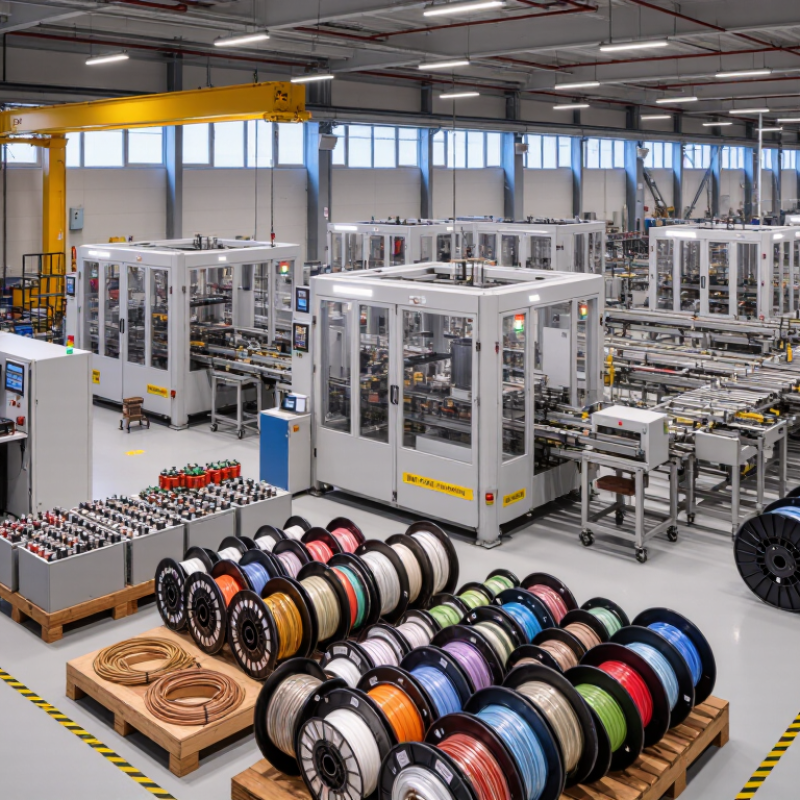
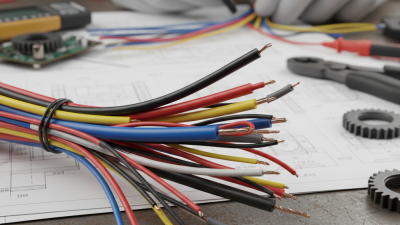
A wire harness is an organized set of insulated wires, terminals, connectors, and protective sleeves. It routes power or signals through a product, often along fixed paths inside a vehicle or appliance.
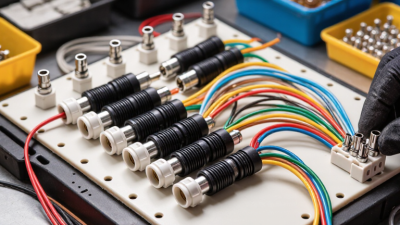
A cable assembly typically groups one or more cables with connectors, contacts, and sometimes shielding or overmolding. It is often built as a finished, tested connection between two points.
The boundary is not always tidy. In practice, people may use the terms differently.
The parts reveal the difference.
A harness may include branch points, clips, labels, and abrasion-resistant loom; a cable assembly may use a shielded cable, sealed plug, and molded strain relief.
Harnesses suit vehicles, machinery, and control cabinets with many routed circuits. Cable assemblies fit sensors, medical equipment, and data links where a defined cable path matters.
The International Energy Agency’s Global EV Outlook 2024 estimated that electric car sales would reach about 17 million that year, more than one in five cars sold worldwide. That growth raises demand for robust vehicle wiring, though sales alone do not specify assembly volumes.
A detail worth checking: bend radius and connector sealing can matter as much as conductor size.
I may be simplifying the distinction. Real designs often blur it.
In 2026, comparing wire harness cable assembly manufacturers by region is more useful than relying on price alone. Nearby suppliers can simplify prototype reviews, engineering changes, and urgent deliveries. Regional sourcing may still mean higher labor costs or limited production capacity. Overseas manufacturers can offer broader scale, but freight time, communication hours, and component availability deserve careful review.
End-market experience matters. Automotive programs often require stable processes, lot traceability, and clear change control. Industrial automation buyers may prioritize flexible designs and durable connectors for vibration or heat. Medical and energy applications can require detailed documentation and consistent inspection records. Ask suppliers for relevant project examples, sample test reports, and a realistic production schedule. A polished presentation is not proof of a dependable process; verify details directly.
Tips: Compare suppliers using the same drawing, forecast, and quality requirements. Check who manages tooling and component substitutions. Request a sample build before committing to volume. Small gaps in communication can become costly later. Even a strong supplier may need time to learn your product.
For a 2026 wire harness supplier, IATF 16949, ISO 9001, and UL 758 address different risks. IATF 16949 focuses on automotive quality management, including traceability and control of production changes. ISO 9001 provides a broader quality-management framework. ISO’s 2022 Survey of Management System Standard Certifications recorded more than 1.2 million ISO 9001 certificates worldwide. That scale makes the certificate a useful starting point, not proof that a supplier can meet your exact assembly requirements.
UL 758 covers appliance wiring material, including wire construction and performance. It does not automatically certify every completed harness. Ask suppliers to identify which wire types are covered and provide current documentation. Then check how they control crimp height, pull-force results, connector substitutions, and lot records. These details matter when a small terminal change affects fit inside a crowded enclosure. A polished certificate can still hide gaps in shop-floor execution.
Tips: Match the certification to the application. For automotive work, verify the supplier’s IATF 16949 scope and site. For UL-related requirements, confirm the actual wire designation and recognition status. Request a sample inspection record and a change-control example. It may feel repetitive, but reviewing real records often reveals more than a sales presentation.
2026 Top Wire Harness Cable Assembly Manufacturers?
IPC/WHMA-A-620: How Its Three Classes Define Assembly Acceptance
A cable assembly is not accepted by appearance alone. IPC/WHMA-A-620 defines three acceptance classes: Class 1 for general electronic products, Class 2 for dedicated service products, and Class 3 for high-performance products. These are application categories, not simple labels for “bad, better, best.” The chosen class shapes how inspectors assess crimps, solder joints, insulation support, and workmanship. Small details matter. A conductor brush that looks slightly long may pass one application’s criteria but fail another’s. Buyers should specify the class, standard revision, and any contract-specific requirements before production begins.
The need for clear requirements is growing alongside electronics markets. The Semiconductor Industry Association reported global semiconductor sales of $627.6 billion in 2024, up 19.1% from 2023, in its February 2025 industry release. That figure does not measure harness demand directly, but it shows the scale of the electronics supply chain assemblies serve. During inspection, teams should check real parts under consistent lighting and record defects with photos and measurements. A standard helps, but it cannot resolve every unclear drawing. That part needs discussion. Class 3 may demand tighter control, yet choosing it automatically can add cost without improving a product’s actual service needs. Companies sometimes overlook that.
Use this framework to compare manufacturers without treating the IPC/WHMA-A-620 classes as a manufacturer ranking. The required class is selected for the end use and should be specified in the purchasing documents. Confirm the applicable revision and any additional customer or regulatory requirements before placing an order.
| Evaluation dimension | Class 1 General Electronic Products |
Class 2 Dedicated Service Electronic Products |
Class 3 High Performance Electronic Products |
|---|---|---|---|
| Typical end-use description | Products where the principal requirement is completed assembly function. | Products requiring continued performance and extended service life, with uninterrupted operation desirable but not critical. | Products where continued high performance or performance on demand is critical; equipment downtime may be unacceptable. |
| Acceptance approach | Apply the Class 1 criteria invoked by the contract and applicable standard revision. | Apply the Class 2 criteria invoked by the contract; document any agreed exceptions. | Apply the Class 3 criteria invoked by the contract; define inspection and evidence requirements clearly. |
| What the class means | An acceptance class for the assembly and its intended use—not a certification or ranking of the supplier. | A more demanding use category than Class 1 where specified requirements apply; it does not replace customer specifications. | The category for critical high-performance applications; the design authority and customer should define applicable requirements. |
| Inspection and acceptance planning | Agree on the inspection plan, sampling or test requirements, and how nonconformances will be handled. | Agree on inspection coverage, test records, and escalation rules based on product risk and contract requirements. | Define inspection, test, traceability, and nonconformance controls explicitly; do not assume a class alone specifies every control. |
| Manufacturer capability to verify | Ability to build to released drawings, bills of materials, workmanship requirements, and agreed acceptance criteria. | Evidence of controlled processes, trained personnel, inspection records, and effective corrective-action practices. | Demonstrated ability to meet the specified controls, retain required records, manage changes, and support customer audits where required. |
| Useful supplier questions | Can you confirm the invoked standard revision, build documentation, and final inspection plan? | How are workmanship requirements, inspection results, and corrective actions documented and reviewed? | Can you provide the required traceability and test evidence, and explain how process or material changes are controlled? |
| Commercial documents to align | Drawing revision, bill of materials, required class, test requirements, and packaging instructions. | The same baseline, plus agreed inspection records, approval points, and nonconformance disposition requirements. | The same baseline, with any specific traceability, change-control, validation, or audit requirements stated in the contract. |
Note: IPC/WHMA-A-620 defines workmanship requirements and acceptance criteria for cable and wire harness assemblies. The class does not by itself establish a supplier’s qualification, guarantee product reliability, or replace the drawing, purchase order, customer specifications, and applicable regulatory requirements.
For a 2026 wire harness cable assembly supplier, compare proven output, not just quoted capacity. Ask for monthly capacity by process, including cutting, crimping, molding, and final testing. Then check recent utilization and how quickly the factory can add a shift. A large facility can still bottleneck at one crimping cell. Details matter.
The scale of the market makes disciplined comparison important. Grand View Research estimated the global wire harness market at about $90.9 billion in 2023 and projected 4.7% annual growth from 2024 to 2030. That forecast signals expansion, not guaranteed production availability. Request lead-time records from purchase-order release through shipment, and separate prototype timing from repeat-order timing. Confirm how shortages of terminals or cable affect the schedule.
Quality and cost need the same close look. Ask for first-pass yield, defect trends, traceability records, and corrective-action examples; audit a sample lot against IPC/WHMA-A-620 workmanship criteria. Compare landed costs using identical drawings, materials, test requirements, packaging, and order volumes. A low quote may omit tooling upkeep or inspection. I would still treat supplier forecasts cautiously: spreadsheets often look more certain than factory schedules. The awkward question is whether the quoted capacity is reserved for your order—or merely available on paper.