How to Choose the Right Agricultural Bearing in 2026?

Choosing the right Agricultural bearing in 2026 requires more than comparing prices or reading product labels. Modern farms demand reliable performance under dust, moisture, vibration, shock loads, and long operating hours. A bearing working near a combine harvester may face crop residue, mud, heat, and sudden load changes within one day. The correct choice must match the machine, shaft size, speed, load direction, sealing method, and maintenance schedule.

Practical experience remains valuable. Field technicians often inspect failed bearings and find simple causes, such as over-tightening, poor alignment, contaminated grease, or unsuitable seals. Manufacturer catalogues and technical datasheets provide essential information about load ratings, clearance, lubrication, and operating temperatures. Independent testing, recognized quality systems, and traceable materials can also support a more reliable decision. Still, specifications alone do not tell the whole story. A bearing rated for heavy loads may fail quickly in a wet, poorly protected housing. That detail is easy to miss.

Farm operators should consider total operating cost, not only the purchase price. A low-cost bearing may create downtime during planting or harvest. Conversely, an expensive model may offer little value for a lightly used machine. Maintenance access matters too. Grease fittings, relubrication intervals, and replacement time can affect real-world performance. No selection guide is perfect. Local soil, climate, workload, and operator habits can change the result. Therefore, verify recommendations with equipment manuals, qualified suppliers, and observed field conditions before purchasing. Careful documentation helps reveal mistakes early, even when the first choice seems reasonable.
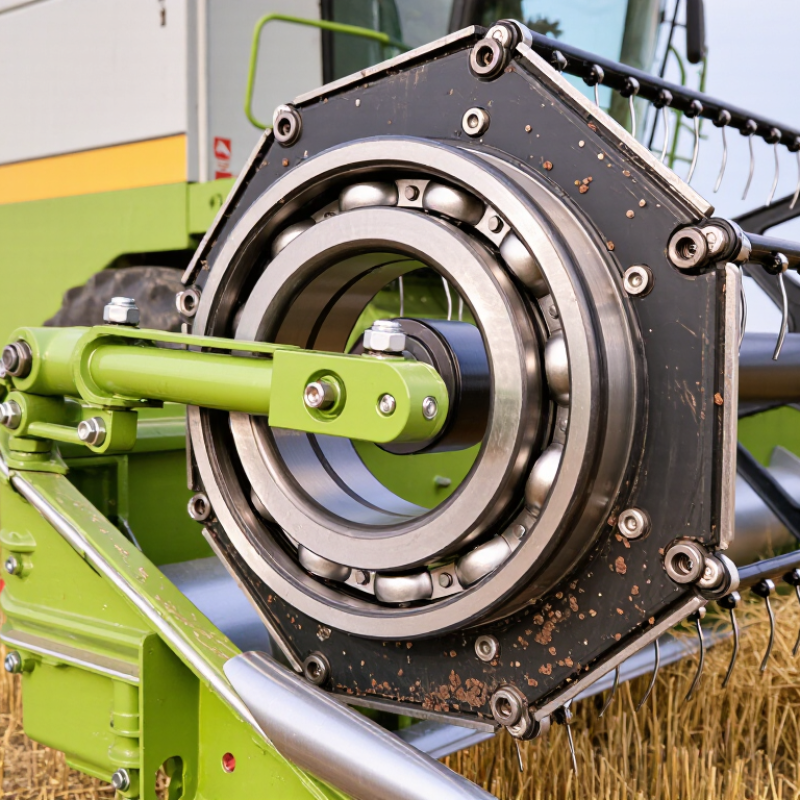
How to Choose the Right Agricultural Bearing in 2026?

Define the Operating Conditions of Your Agricultural Equipment

How to Choose the Right Agricultural Bearing in 2026?

Define the Operating Conditions of Your Agricultural Equipment

Start with the field, not the bearing catalog. Record load, rotation speed, temperature, and working hours. A grain conveyor may run continuously, while a planter works in short, dusty cycles. These differences change bearing requirements.

Inspect the environment closely. Dry soil creates fine abrasive dust around exposed shafts. Irrigation equipment may face water, fertilizer residue, and repeated cleaning. Mud can enter through small gaps. Check shaft alignment, housing stiffness, vibration, and available sealing space. Even a small misalignment can create heat and uneven wear.

Measure real conditions when possible. Use a thermometer near the bearing after peak operation. Note unusual noise, grease discoloration, and looseness during maintenance. Do not rely only on a machine manual. Field conditions often differ from design assumptions. A clean test area can mislead you. That matters.

Match the bearing design to the evidence. Heavy shock loads may require stronger internal geometry. High speeds demand careful lubrication and heat control. For outdoor equipment, corrosion resistance and effective sealing deserve equal attention. Grease quantity also matters. Too much grease can raise operating temperature. Too little can accelerate wear. Keep service records with dates, hours, and failure signs. Perfect predictions are rare. Careful measurements are better.

Match Bearing Types to Loads, Speeds, and Motion Requirements

How to Choose the Right Agricultural Bearing in 2026?

Bearing selection should begin with motion, not catalog price. Radial loads suit deep-groove or spherical designs. Heavy axial loads need thrust-capable arrangements. Combined loads often require tapered or self-aligning solutions. A conveyor idler rotates steadily, while a planter linkage may oscillate through short angles. They cannot share the same bearing specification.

Speed changes the calculation. Higher speed increases heat, lubricant stress, and sealing demands. ISO 281:2007 defines basic rating life using a 90% reliability reference, but field life can fall sharply under contamination. Soil dust, fertilizer particles, water, and pressure-washing are common threats. Choose suitable clearance, robust seals, and grease compatible with operating temperatures. Keep it practical.

The USDA’s 2023 Farm Production Expenditures report recorded $481.9 billion in U.S. farm production spending. That scale makes avoidable downtime expensive, even when one bearing seems inexpensive. I would check peak load, shock, shaft fit, misalignment, and washdown frequency before selecting a part. A clean calculation can still fail in muddy reality. Sometimes the mistake is mine: I may overvalue load capacity and undervalue sealing. Maintenance records should challenge the first choice, not merely confirm it.

How to Choose the Right Agricultural Bearing in 2026?

Match bearing types to load direction, speed, and motion requirements.

The chart uses a general engineering suitability index from 1 to 5, rather than manufacturer load ratings. Spherical roller bearings are typically preferred for high radial loads and misalignment, tapered roller bearings for combined radial and axial loads, deep-groove ball bearings for higher speeds, needle roller bearings where radial load capacity is needed in limited space, and spherical plain bearings for oscillating motion. Final selection should be verified against dynamic and static load ratings, speed limits, sealing, lubrication, shock loads, and contamination conditions.

Evaluate Sealing, Lubrication, and Contamination Protection

Choosing an agricultural bearing in 2026 requires more than checking load ratings. Sealing, lubrication, and contamination protection often decide service life. Field conditions are severe. Mud reaches housings, harvest dust enters small gaps, and wash water can force past weak seals. I have seen clean-looking equipment hide rust beneath the seal lip. It happens quietly.

Contact seals provide stronger protection against water and abrasive dust. They can create more friction and heat, however. Non-contact seals reduce drag but may expose the bearing in dusty fields. The correct choice depends on speed, temperature, cleaning methods, and contamination levels. I once selected a low-friction design for a slow conveyor. The seal protection was inadequate, and grease became gritty within weeks. That mistake changed my inspection checklist.

Lubrication must match the bearing’s speed, temperature, and surrounding chemicals. Use compatible grease, and follow a measured relubrication schedule. More grease is not always better. Overgreasing can raise operating temperature and push lubricant through the seals. In practice, I check purge condition, shaft play, abnormal noise, and grease color during maintenance. A small sample can reveal water or metal particles. Keep records by machine and operating hours. They expose patterns that memory misses. When conditions change, such as heavier rain or fertilizer dust, review the seal and lubrication choice instead of waiting for failure.

How to Choose the Right Agricultural Bearing in 2026? - Evaluate Sealing, Lubrication, and Contamination Protection

Agricultural Application Typical Operating Conditions Recommended Bearing Arrangement Preferred Sealing Lubrication Guidance Contamination Protection Selection Priority
Disc harrow and tillage shafts Heavy shock loads, vibration, abrasive soil, intermittent operation, moderate shaft speeds Spherical roller or agricultural insert bearing with a robust housing; use self-aligning capability where frame deflection is expected Contact seal, preferably with multiple sealing lips and an auxiliary flinger Use water-resistant, high-load grease. Relubricate according to duty severity and purge old grease before contamination becomes visible Prioritize exclusion seals, protected grease paths, and a housing that prevents direct soil impact Shock-load capacity, misalignment tolerance, and sealing durability
Seed drill metering shafts Low-to-moderate loads, continuous rotation, fine dust from seed treatment and dry soil Deep-groove ball bearing or sealed insert bearing sized for continuous rotation Low-friction contact seal or shielded design where dust exposure is controlled Factory-filled grease is often suitable if operating temperature and speed remain within the bearing specification; avoid over-greasing Use close-fitting seals and keep seed dust away from the shaft-to-seal interface Low starting torque, dust exclusion, and stable running temperature
Planter row-unit pivot points Oscillating movement, high mechanical loads, mud, fertilizer residue, and frequent washdown Spherical plain bearing, bush, or sealed insert bearing selected for oscillation and load rather than high speed Heavy-duty contact seal with external protection from pressure-washer spray Use grease compatible with the bearing liner or seal material. Apply small, regular quantities through a protected lubrication point Use shielded grease fittings, drainage paths, and seals rated for water and fertilizer exposure Oscillation capability, chemical resistance, and water exclusion
Combine harvester elevator and auger shafts Long operating hours, moderate-to-high speed, grain dust, vibration, and seasonal heat buildup Deep-groove ball or spherical roller bearing with adequate dynamic load rating and thermal margin Low-friction sealed bearing in cleaner areas; multi-lip contact seal in dusty zones Select grease for the actual speed and temperature. Do not mix incompatible thickener systems without confirming compatibility Use labyrinth or flinger protection where practical, plus seals that limit fine-particle ingress Speed capability, heat control, dust exclusion, and grease life
Hay baler pickup and knotter mechanisms Rapid speed changes, shock loads, crop residue, dust, and short periods of intensive seasonal use Sealed deep-groove ball bearing or cylindrical roller bearing where radial load is high Contact seal with a protective shield or flinger; avoid exposed open bearings unless frequent cleaning is controlled Use a mechanically stable grease with good resistance to vibration and worked-penetration change Use non-contact labyrinth protection for high-speed areas and contact seals for severe residue exposure Vibration resistance, seal retention, speed rating, and easy inspection
Manure spreader and slurry equipment High moisture, corrosive chemicals, impact loading, low-to-moderate speed, and difficult cleaning conditions Corrosion-resistant sealed bearing or heavy-duty housed bearing with sufficient static load capacity Multiple-lip contact seal with corrosion-resistant external components Use water-resistant grease with corrosion-inhibiting properties; replenish after severe washdown when recommended by the manufacturer Prioritize chemical-resistant seals, stainless or coated exposed parts, and avoidance of trapped wash water Corrosion resistance, water exclusion, static load capacity, and serviceability
Irrigation pump and pivot-system components Continuous or extended operation, water exposure, alignment variation, and moderate rotational speed Sealed deep-groove ball bearing or self-aligning bearing where shaft alignment may vary Water-excluding contact seal; use non-contact protection only in controlled, clean environments Use grease rated for wet environments and verify that the relubrication interval matches the operating temperature and speed Provide splash shields, drainage, and seals resistant to repeated moisture exposure Water resistance, alignment tolerance, continuous-duty temperature, and corrosion control
Trailer, wagon, and transport wheel hubs Variable radial and axial loads, road vibration, braking heat, and occasional water or mud exposure Tapered roller bearing pair or sealed hub bearing sized for combined radial and axial loads Dedicated hub seal with a protected lip and correct interference fit Use the specified wheel-bearing grease and set preload or endplay precisely; incorrect adjustment can cause overheating or looseness Use a properly installed hub seal, clean assembly practices, and protection against high-pressure water ingress Combined-load capacity, heat management, sealing integrity, and correct adjustment

Selection note: Confirm the final bearing size, load rating, speed limit, operating temperature, seal material, grease compatibility, shaft fit, housing fit, and relubrication interval against the equipment operating manual and bearing manufacturer’s technical data.

Compare Materials, Durability, Maintenance, and Total Cost

Choosing the right agricultural bearing in 2026 starts with the working environment, not the catalog price. Dust, mud, fertilizer residue, water, vibration, and uneven loads can attack a bearing within one season. During equipment inspections, I look for rust tracks, dark grease, loosened seals, and unusual heat. These details often reveal problems before a harvester stops.

Material matters. Hardened steel suits heavy loads and shocks, while stainless steel better resists moisture and corrosive residue. Polymer-based options can reduce corrosion and lubrication needs, but their load and temperature limits require careful checking. Durability depends on more than material strength. A properly sealed bearing may outlast a stronger bearing exposed to contamination. Check rated load, speed, alignment tolerance, sealing quality, and operating temperature. For dusty fields, multi-lip seals and suitable grease can protect rolling surfaces. However, over-greasing can raise heat and damage seals. A common mistake. Set inspection intervals around real use, not only calendar dates.

Total cost includes purchase price, labor, grease, downtime, and replacement access. A cheaper bearing can become expensive after one failed field operation. Estimate the cost of a stopped machine during harvest. Then compare expected service life under your actual conditions. Keep spare units sealed and labeled. I would also record temperature and vibration readings, even when the machine seems normal. Data makes maintenance decisions more defensible. Still, forecasts are imperfect. Review the choice after each season and adjust the specification when field evidence disagrees.

Verify Standards, Supplier Quality, and Installation Compatibility

How to Choose the Right Agricultural Bearing in 2026?

A suitable agricultural bearing starts with verified standards, not a low price. Check whether its dimensions, load ratings, sealing performance, and material data follow recognized engineering standards. Request inspection reports for hardness, radial clearance, and surface finish. The certificate should identify the production batch and testing method. Generic paperwork is not enough. Compare the stated dynamic load rating with real conditions, including shock loads from rough fields and frequent washing.

Supplier quality deserves direct attention. Ask how the supplier controls heat treatment, machining, lubrication, and final inspection. Reliable suppliers can explain their traceability process without hesitation. Review sample records, warranty terms, and technical support response times. A clean warehouse also matters. Dirt around sealed bearings can reveal weak handling practices. One practical check is simple: inspect several pieces from different boxes, not only one perfect sample.

Installation compatibility can decide service life. Confirm shaft diameter, housing tolerance, mounting method, rotation speed, and required internal clearance. Check whether the seal suits dust, moisture, crop residue, and temperature changes. Use the recommended lubricant and proper mounting tools; striking the ring can damage the raceway. Alignment errors are easy to miss. A bearing may feel smooth by hand but overheat after hours of field work. I have seen teams focus heavily on specifications and overlook fit, which is an uncomfortable reminder that correct selection is only part of reliability.