How to Choose the Right Compact Track Loader Track Roller
A compact track loader can work through mud, gravel, demolition debris, and uneven ground, placing repeated loads on its undercarriage. The Compact Track Loader Track Roller helps support and guide the track, so its fit and condition affect more than routine maintenance. Small part. Real consequences.
The U.S. Census Bureau reported that construction spending reached an estimated $2.154 trillion in 2024, up 4.3% from 2023. This broad figure does not measure track-roller demand or predict wear. It does show why equipment uptime matters across a busy construction sector. Caterpillar’s Undercarriage Management guidance also stresses regular inspection and attention to operating conditions—useful principles when evaluating roller wear. Still, no report can identify the correct replacement for every machine.
Start with the loader’s make, model, and serial number, then verify the part reference with a dealer or parts catalogue. Compare roller width, flange profile, mounting dimensions, and seal design; a close-looking part may not fit correctly. Consider the worksite too. Fine sand, sharp rock, and sticky clay leave different wear patterns on the roller and track. Look for leaking seals, unusual noise, uneven rotation, or visible damage before ordering. These clues help, but they are not a complete diagnosis. I would not choose by price alone; that shortcut can cost more in downtime. This guide explains what to check, which specifications to confirm, and when professional inspection is the safer choice.
Understand the Role of Track Rollers in a Compact Track Loader
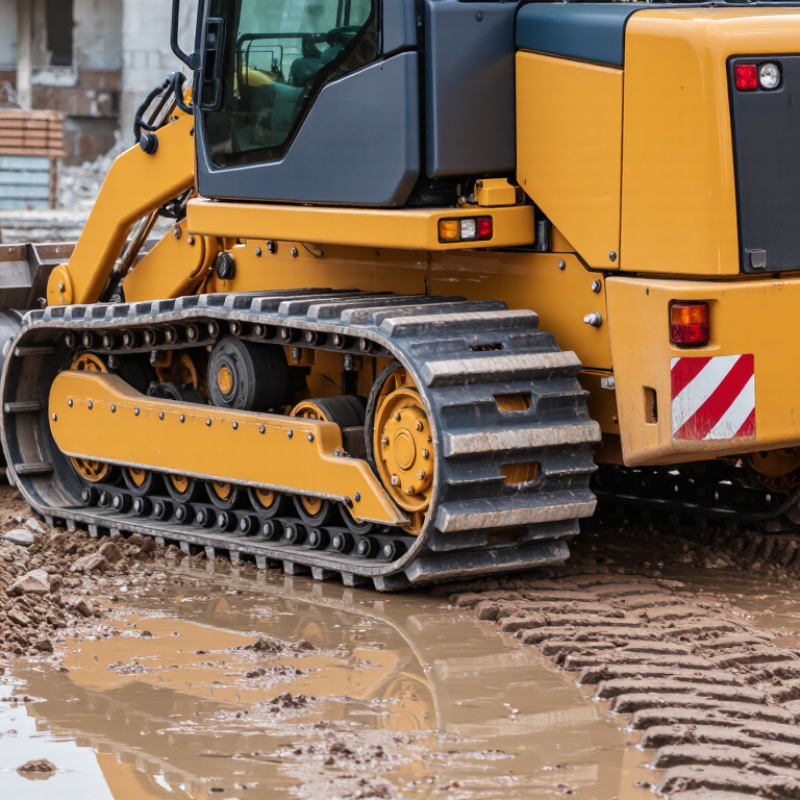
Track rollers support the compact track loader’s weight and guide the track along the undercarriage frame. As the machine turns, climbs, or carries a bucket, rollers help keep the track aligned and distribute load across its inner surface. A worn roller can create uneven contact, extra vibration, and accelerated track wear. Small parts. Big consequences.
Construction Equipment’s undercarriage maintenance guidance places undercarriage costs at roughly 20–50% of a tracked machine’s maintenance budget, depending on conditions and upkeep. That broad range is a useful warning, not a prediction for every loader. When choosing replacement rollers, match the machine’s specifications, including dimensions, mounting points, and seal design. Check for oil leakage, rough rotation, unusual play, or flat spots; mud packed around the frame can hide early signs. On a daily walkaround, look for uneven wear across the rollers and track. This inspection is simple, but easy to skip when the machine is busy. Operating surface and track tension also affect roller life, so a tougher roller cannot compensate for poor adjustment or neglected cleaning.
Match Roller Specifications to the Loader’s Make and Model
Choosing the right compact track loader track roller starts with the machine’s exact make, model, and serial number. Similar model names can hide changes between production years. Check the parts manual or service documentation for the correct roller assembly and any updated part numbers. A close visual match is not enough.
Compare the roller’s diameter, width, shaft dimensions, mounting points, and tread profile with the specified part. Also confirm that its load rating suits the loader and the work it performs. Mud, gravel, and frequent turns can increase undercarriage wear. It is easy to overlook a small offset, but that difference may affect alignment and track wear.
Tips: Measure the old roller, including its shaft and mounting spacing. Take clear photos before removal. Verify the measurements against reliable parts information, and ask a qualified parts specialist to confirm fitment when details conflict. Don’t guess. A careful check may take longer, but replacing a mismatched roller can create more downtime. Even then, inspect the surrounding components; a new roller cannot correct damage elsewhere in the undercarriage.
Compare Roller Designs, Materials, and Sealing Systems
How to Choose the Right Compact Track Loader Track Roller
Compare Roller Designs, Materials, and Sealing Systems
Roller design affects guidance, load distribution, and wear. Single-flange rollers suit some positions; double-flange designs help constrain track movement. Match the roller profile to the machine’s specified position, not just its dimensions. A close fit matters. Check the shell for flat spots, scoring, and uneven wear during routine inspections.
Material and heat treatment influence resistance to impact and abrasion. A hardened running surface can resist wear, but it cannot compensate for poor alignment or excessive track tension. ISO 281:2007 defines basic bearing rating life, L10, as the life reached by 90% of a group of identical bearings under stated conditions. Actual service life can differ sharply when shock loads, dirt, or installation errors enter the picture. Standards are a guide, not a promise.
Seals protect the internal bearing and lubricant from water and abrasive fines. Compare seal contact design, grease retention, and protection against debris at the roller ends. ISO 4406:2021 classifies fluid cleanliness by particle counts at 4, 6, and 14 μm(c); these thresholds illustrate why small contaminants deserve attention. A clean exterior does not prove a seal is sound. Look for grease leakage, abnormal heat, and rough rotation. Inspection can still miss early seal damage, so replacement decisions should consider operating hours and site conditions together.
Choose a Roller for Your Terrain and Operating Conditions
Start with the ground the compact track loader works on most often. Firm, dry soil places less stress on the undercarriage than rough, abrasive ground. Gravel and broken rock can accelerate wear, especially when sharp material repeatedly passes beneath the tracks. Mud creates a different problem. Packed debris can restrict roller movement and hide early damage. Conditions change. That matters.
Match the roller’s design and dimensions to the machine’s specifications, not just the job description. Flange configuration affects track guidance, while roller size and mounting details must suit the existing undercarriage. Check the operator’s manual or service information before ordering. A roller that appears close can still create poor alignment or uneven track wear. If jobs vary between soft ground and hard surfaces, consider which conditions dominate and how often the loader travels between them.
Operating habits count, too. Heavy loads, frequent turns, and long travel distances can increase heat and wear. After work, remove packed mud and look for loose hardware, damaged seals, unusual noise, or uneven wear across the rollers. Compare findings over time; one inspection may not reveal a trend. There is no perfect choice for every terrain, and the cheapest option may not last. Still, the most durable roller cannot compensate for incorrect tension or neglected maintenance.
Verify Fitment, Durability, and Maintenance Requirements
Choosing the right compact track loader track roller starts with exact fitment, not appearance. Match the machine’s model, serial range, roller position, shaft dimensions, mounting pattern, and track-frame width. Compare the old part with the supplier’s measurements, including flange shape and overall width. A roller can look right on a bench yet sit wrong under the frame. Small differences matter. Recheck the parts list before ordering.
Tips: Measure the removed roller after cleaning away packed dirt. Photograph its mounting position, and note any spacers or unusual wear. It is easy to miss one detail when the machine is down; a second check can prevent a poor fit.
Durability depends on workload and ground conditions. For rocky or abrasive sites, look for robust seals and hardened running surfaces, then confirm the roller is rated for the machine’s operating weight. No part is maintenance-free. Inspect for oil seepage, unusual play, flat spots, and rising heat during routine walkarounds. Check track tension too: excessive tension can add load to rollers and bearings. Clear mud and debris before they harden around the undercarriage. If wear appears uneven, inspect alignment and neighboring components rather than replacing one roller and stopping there. A small amount of extra checking often saves downtime.
How to Choose the Right Compact Track Loader Track Roller
Verify fitment, durability, and maintenance requirements
Checklist coverage: The bars count the checks listed for each selection category; they are not performance ratings. Confirm roller dimensions, mounting arrangement, and machine compatibility against the loader’s parts information. Check construction and sealing for the operating conditions, and review inspection and replacement guidance in the operator’s manual.