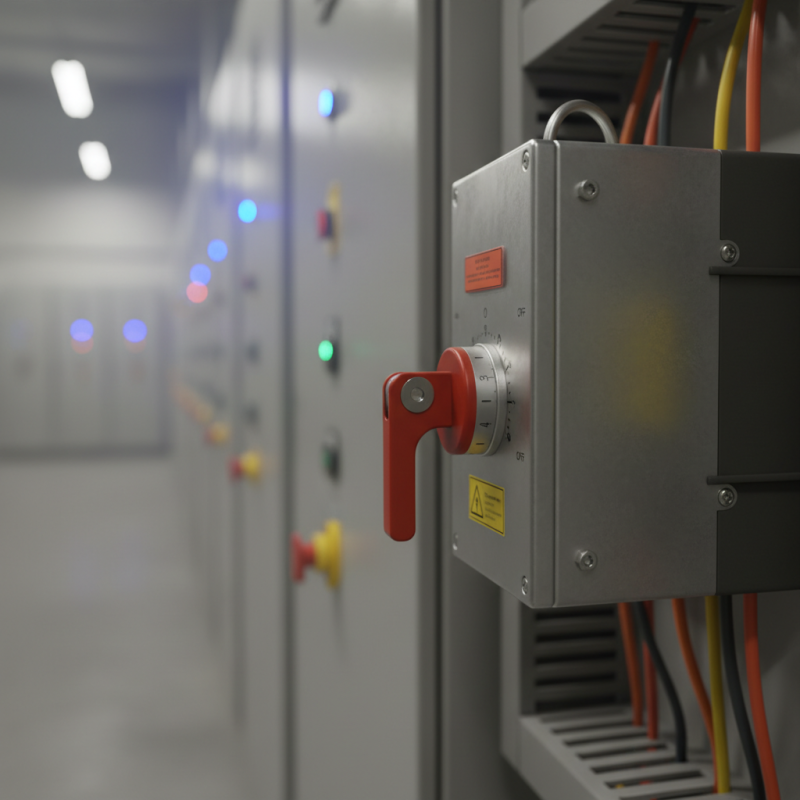
How to Choose the Right Isolation Switch for Your Needs?
Choosing the right Isolation Switch is crucial for safety and performance. John Smith, an industry expert, once stated, “The right isolation switch can prevent accidents and save lives.” Understanding the specific needs of your application is vital. Consider factors like voltage rating, current rating, and environment when selecting.
Many overlook the importance of an Isolation Switch. It’s more than just a disconnect. It serves a critical role in protecting equipment and personnel. A well-chosen isolation switch can enhance efficiency and safety in operations.
Reflect on your priorities. Are you focusing on reliability or cost? Each choice comes with trade-offs. Evaluating your needs ensures you make an informed decision. In the world of electrical systems, the right Isolation Switch matters significantly.
Understanding the Purpose of Isolation Switches in Electrical Systems
Isolation switches play a crucial role in electrical systems. They provide a means to disconnect circuits, ensuring safety during maintenance or emergencies. Often, these switches are found in residential, commercial, and industrial settings. Their primary purpose is to isolate electrical equipment from sources of electrical energy.
Choosing the right isolation switch is about understanding your specific needs. Consider factors such as voltage, current rating, and installation location. Is the switch weatherproof? Will it be used indoors or outdoors? A mismatch can lead to significant issues. It’s essential to analyze the context of use. A switch that works perfectly in one scenario may fail in another.
Failure to select the proper isolation switch can lead to equipment damage or safety hazards. Think about future expansions too. A switch that suffices today might not meet demands tomorrow. Balancing immediate needs with long-term planning is a challenge many face. Engage with professionals for insights, but remember, understanding your own requirements is key.
Identifying Different Types of Isolation Switches Available in the Market
When selecting an isolation switch, understanding its types is crucial. There are several options available in the market, each serving different functions. The most common types include rotary switches, push-button switches, and knife switches. Rotary switches are often easy to use and can control multiple circuits. However, if not installed correctly, they may lead to confusion during operation.
Push-button switches offer a compact solution. They can provide a quick disconnect feature, useful in urgent situations. Still, their reliability depends heavily on the quality of components used. Knife switches, on the other hand, are visually appealing and provide a clear indication of the on/off status. However, they may not be suitable for all environments, especially where accidents might occur.
It’s important to consider the environment where these switches will be used. For instance, moisture-prone areas require switches with specific ratings. It's easy to overlook these details, which may lead to unforeseen issues down the line. Choosing the right isolation switch requires careful inspection of functions and adaptability to situations, ensuring safety and efficiency.
Evaluating the Technical Specifications for Your Specific Applications
Choosing the right isolation switch requires understanding its technical specifications. Each application has unique demands that influence your decision. Consider voltage ratings, current capacities, and the switch's operational environment. Any mismatch can lead to failure.
Look at the switching mechanism. Is it manual or automatic? Manual switches provide control. They can be very useful in smaller systems. However, automatic switches offer convenience for larger, more complex applications. Evaluate your system's complexity before making a choice.
Don’t forget about safety features. Some switches include indicators for status. Others may not. Think carefully about the safety requirements for your specific situation. A lack of clear indications can lead to operational errors. Always prioritize clear, accessible information in your selection process.
How to Choose the Right Isolation Switch for Your Needs?
| Specification | Description | Importance |
| Voltage Rating | The max voltage the switch can handle. | Ensures compatibility with your system. |
| Current Rating | The maximum current the switch can conduct. | Prevents overheating and potential failure. |
| Isolation Type | Mechanical or Electrical Isolation options. | Determines the level of protection. |
| Number of Poles | Single or Multi-pole configurations. | Affects circuit structure and safety. |
| Environmental Ratings | Ingress Protection (IP) ratings. | Ensures durability under environmental factors. |
| Mounting Type | Panel, DIN-rail, or Wall-mounted. | Convenience based on installation plan. |
Determining the Environment and Conditions for Proper Switch Selection
When selecting an isolation switch, it’s crucial to understand the specific environment where it will be used. According to industry research, over 30% of switch failures are linked to inappropriate environmental conditions. For instance, switches installed in high-humidity areas may experience corrosion more quickly than those in dry environments. Ensuring that the switch can withstand moisture levels is key.
Temperature extremes can also impact performance. A switch rated for -20°C to 60°C might not function reliably in a climate that experiences greater fluctuations. Additionally, the presence of dust or chemicals can compromise a switch’s integrity. Data indicates that switches located in dusty environments face a significantly higher failure rate, often exceeding 25% in the first two years of use.
Consideration of these factors is vital. Many users overlook the significance of the environmental impact. Purchasing a switch without assessing these conditions can lead to unexpected failures. This often forces costly replacements or repairs. Identifying the right environment will yield longer-lasting equipment and smoother operations.
Considering Safety Standards and Compliance Requirements for Isolation Switches
Choosing the right isolation switch involves understanding safety standards and compliance requirements. Various industries have specific regulations. These standards ensure reliable operation and user safety. Familiarizing yourself with local guidelines is crucial. It helps in selecting a compliant product.
Tips: Always check for certifications. Look for switches that meet IEC or UL standards. This ensures safety in your application. Don’t overlook manufacturer recommendations. They provide insights into ideal use cases.
Consider the installation environment. Harsh conditions can affect performance. Some switches work well in extreme temperatures, while others don’t. Evaluate your needs carefully. Take time to analyze the potential risks involved. Remember, safety is paramount. Investing in quality switches may prevent future issues.
Isolation Switch Safety Compliance Ratings