A bolt and a screw can look nearly identical on a workbench, yet their names affect how a joint is designed, installed, and inspected. In common engineering practice, a bolt usually passes through clearance holes and is tightened with a nut. A screw typically engages a threaded hole or forms its own thread in the material. That distinction is useful, but not perfect. Standards and shop terminology sometimes use the words differently.
Technical references help make the comparison more precise. ASME B18.2.1 specifies dimensions for inch-series square and hex bolts and screws, while ISO 4014 and ISO 4017 distinguish common hexagon-head fasteners by thread coverage. For industry context, U.S. Census Bureau trade datasets and USITC DataWeb publish fastener-related shipment classifications and values. Those records describe trade, not the mechanics of a joint. That difference matters. A data table cannot tell you whether a fastener will loosen under vibration or damage a soft aluminum part. In practice, check the drawing, standard, material, thread, and installation method—not just the head shape. Even experienced buyers can inherit inconsistent naming from old catalogs. That is worth questioning. A careful Bolt Screw comparison starts with the joint’s function, then verifies the relevant specification.
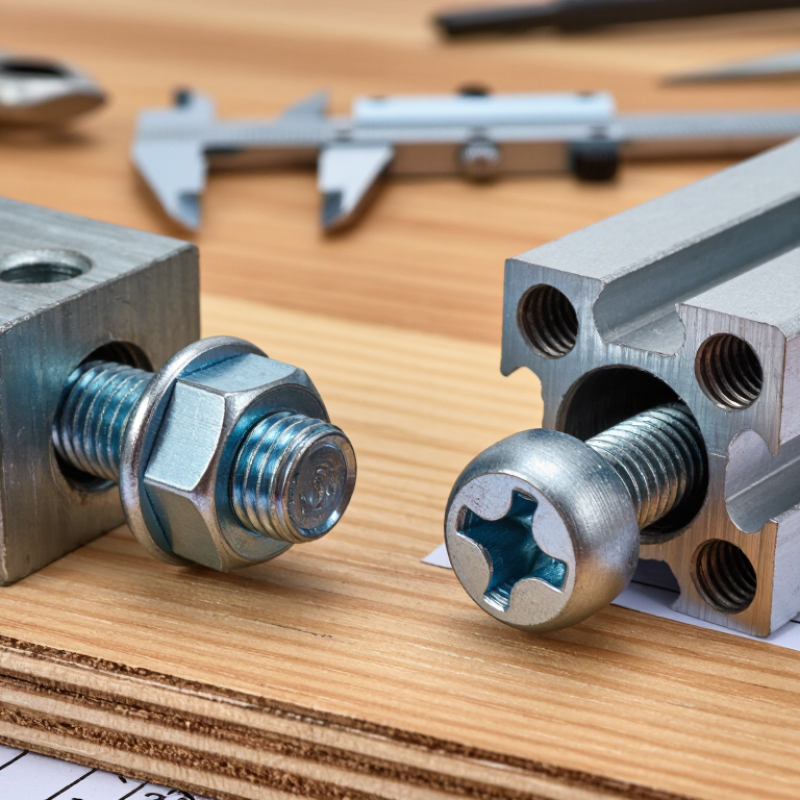
A bolt is a threaded fastener usually passed through aligned holes in two or more parts. A nut turns onto its exposed end and clamps the parts together. The bolt’s threads help create and maintain that clamping force. For example, a bolt can pass through two steel plates, with a washer and nut fitted on the far side. That is the core.
A screw usually fastens parts by turning its threaded shank into a material or a threaded hole. Its head provides a surface for a driver, while the threads resist the force trying to pull the parts apart. Some screws cut their own threads in wood or sheet material; others fit into threads made beforehand. Bolts and screws can look similar, and everyday naming is not always consistent. The connection matters more than appearance: a bolt commonly works with a nut, while a screw commonly engages the part itself. There are exceptions, so check the fastener’s design and installation instructions.
Tips: Match the fastener to the materials and expected load. Check the hole size, thread fit, and required length before tightening. Fit matters. If a joint loosens or the material begins to split, stop and reassess the fastener choice and installation.
What Is the Difference Between a Bolt and a Screw?
How Bolts and Screws Engage with Materials
A bolt usually passes through a clearance hole and clamps parts when tightened against a nut. A screw typically forms or enters threads in a tapped hole or directly in the material. The practical distinction is engagement: a bolt’s threads commonly engage the nut, while a screw’s threads engage the workpiece. The boundary is not absolute; design practice sometimes uses the terms differently.
NASA’s Fastener Design Manual, RP-1228, discusses how friction affects the relationship between tightening torque and preload. A common engineering estimate is that only about 10% of applied torque stretches the fastener; much of the rest is lost to friction under the head and along the threads. That means a screw biting into soft wood and a bolt tightened into a steel nut can respond very differently. Material, pilot-hole size, thread pitch, and engagement length all matter. A neat-looking fit can still be weak.
Tips: For a screw in wood, check the manufacturer’s pilot-hole guidance and avoid splitting near an edge. For a bolted joint, use a washer when the bearing surface needs protection, and tighten to the specified torque. Feel alone is a poor gauge. I still find that easy to underestimate.
| Comparison | Bolt | Screw |
|---|---|---|
| Typical engagement | Usually passes through clearance holes in the joined parts and engages with a separate nut. | Usually engages directly with a threaded hole or forms threads in the material as it is driven. |
| What creates the clamping force? | Tightening the nut, or sometimes the bolt head, stretches the fastener and clamps the parts together. | Turning the screw advances its threads into the material or an existing threaded hole, drawing the parts together. |
| Hole preparation | Typically uses a clearance hole large enough for the bolt shank to pass through; a separate nut is commonly used. | May use a pilot hole, a pre-tapped hole, or no pilot hole, depending on the screw type and material. |
| How the threads engage | The bolt threads generally engage the nut rather than the parts being joined. | The threads generally engage the workpiece, a threaded insert, or a tapped hole. |
| Common applications | Machinery, structural connections, and assemblies where parts can be accessed to fit a nut. | Woodworking, sheet-metal assembly, and equipment or components with tapped holes. |
| Disassembly | Often straightforward when the nut and bolt are accessible; the joint can usually be separated without damaging the parts. | Can usually be removed by turning it out, though repeated use may wear threads in softer materials. |
| Important qualification | Usage varies by industry and application. A fastener’s name alone does not always determine how it must engage; its design, installation method, and joint configuration matter. | |
What Is the Difference Between a Bolt and a Screw?
Key Differences in Design and Installation
A bolt typically passes through aligned, unthreaded holes and is secured with a nut. A screw usually forms its hold by engaging threads in the material or in a pre-threaded hole. That distinction matters. Bolts often have a smooth section beneath the head, while screws commonly carry threads along much of the shank. But terminology varies, especially for machine screws used with nuts.
Installation depends on access and material. With a bolt, hold the head steady and tighten the nut on the opposite side. A washer can spread pressure across a softer surface. With a screw, choose a driver bit that fits snugly, then turn it into the workpiece. In hardwood, a pilot hole can reduce splitting; in thin sheet metal, the wrong screw may strip the hole. Small details count.
The joint’s job should guide the choice. A bolt-and-nut connection can be disassembled easily and clamped firmly, which suits parts with access on both sides. A screw is useful when only one side is reachable, or when fastening into wood. Do not rely on appearance alone: check the thread, material, and load requirements. Over-tightening can damage threads or crush the surface, and I still find it easy to underestimate how quickly that happens.
Key differences in design and installation
This chart summarizes common usage, not strict rules: bolts are commonly used with a nut to clamp parts together, while screws typically engage a threaded hole or form threads in the material. Both types can be installed with different tools, and terminology varies by application.
Bolts and screws solve different fastening problems on real jobs. A bolt usually passes through aligned holes and tightens against a nut, making it useful for steel frames, machinery mounts, and vehicle assemblies. Screws form or enter threads in wood, sheet metal, or plastic. They suit cabinet hinges, drywall, electrical enclosures, and smaller repairs. A hex-head bolt may need a wrench and access to both sides. A countersunk screw can sit nearly flush with a panel. Small details matter.
The U.S. Census Bureau reported about $1.98 trillion in U.S. construction spending for 2023.
World Steel Association data put 2023 global crude steel production at about 1.89 billion tonnes.
That scale helps explain why crews use many fastening methods, from structural bolting to wood screws. These figures describe the industries around fasteners, not bolt or screw consumption; neither report counts them separately. In practice, vibration, load, material, and access should guide the choice. A screw can loosen in a weak substrate, while a bolt may be awkward where a nut cannot be reached. The boundary is not perfect. Some screws are designed for heavy structural work, so checking the fastener specification matters more than relying on its name.
Choosing the right fastener starts with the joint, not the label. A bolt usually passes through clearance holes and tightens against a nut. A screw typically cuts into or engages threads in the material itself. The distinction is not absolute; usage varies across trades and hardware types. Check how the parts connect.
For a shelf bracket, a screw may grip a wooden stud directly. For two steel plates with access on both sides, a bolt and nut can create a strong, serviceable joint. Consider the material, expected load, vibration, and exposure to moisture. A small fastener in soft wood may pull out, while an oversized one can split the board. Measure the thickness carefully.
Match the fastener’s diameter and length to the job, and use a washer when the head or nut could press into a soft surface. In metal, confirm the hole size and thread compatibility; mismatched threads can damage the joint. Follow the project’s specifications when loads matter. I still pause over the terminology sometimes, because catalogs do not always draw the line consistently. That distinction blurs. The fit and the materials matter more than the name on the box.