What Are the Top Hose Combination Types for Buyers in 2026?
Choosing the right Hose Combination in 2026 means matching the assembly to its actual working conditions. Buyers may encounter hose-and-coupling sets for water transfer, air service, hydraulic equipment, chemical handling, or food and beverage operations. Each serves a different purpose. A hose that looks suitable on a product page may still fail when pressure, temperature, or the conveyed material is overlooked.
Start with the application, not the price. Check the hose’s working-pressure rating, temperature range, inner-tube material, reinforcement, and compatibility with the fluid. Then confirm that the couplings, clamps, and seals fit the hose and equipment correctly. A mismatch can cause leaks, premature wear, or unplanned downtime. Small details matter. A fitting that differs by thread type or diameter may not connect safely, even when the hose itself is appropriate.
This guide compares common hose combination types and explains where each may fit. It also highlights questions buyers can ask suppliers, such as whether ratings apply to the complete assembly or only the hose. Request product documentation and verify specifications against the equipment manufacturer’s requirements. Conditions vary between installations, so no single combination is best for every buyer. That part is easy to miss. And product descriptions do not always make comparisons simple. Use the categories here as a starting point, then check the details that matter for your operating environment before purchasing.
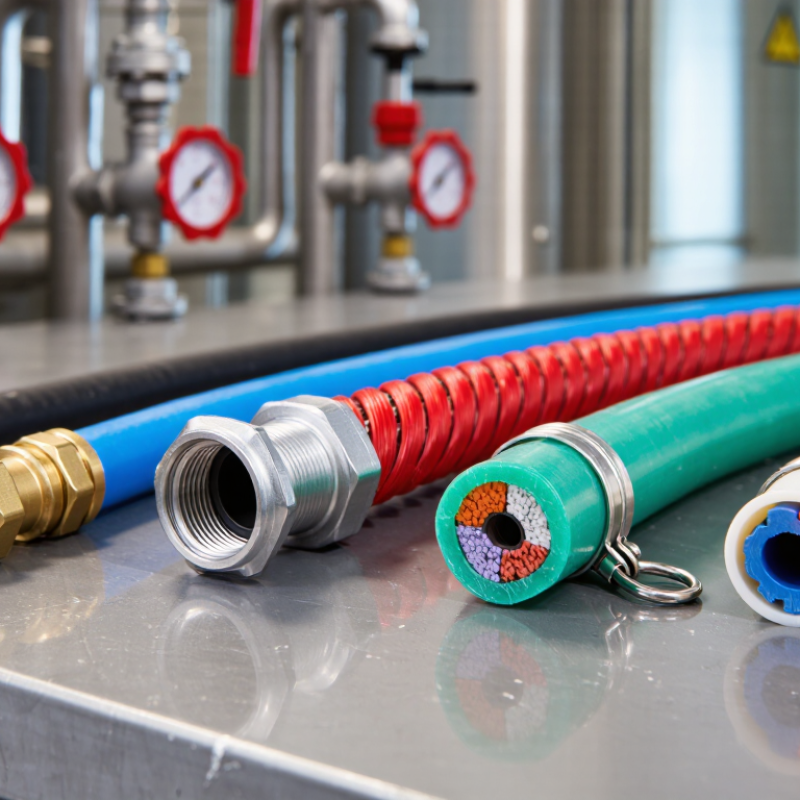
Hose Combinations Explained: Tube, Reinforcement, Cover, and Fittings
A hose combination is more than a tube with an end fitting. It is a matched assembly of inner tube, reinforcement, outer cover, and connections. The tube contacts the fluid, so check chemical compatibility and temperature limits against supplier data. Rubber, thermoplastic, and PTFE tubes serve different duties. There is no universal winner. Details matter.
Reinforcement controls pressure capacity and flexibility. Textile layers can suit lower-pressure service, while braided or spiral wire supports higher-pressure applications. Match the construction to working pressure, pressure spikes, and bend radius. A stiff hose forced around a tight corner may kink or fatigue early. The cover protects against abrasion, oil, heat, sunlight, or weather, depending on its compound. Buyers sometimes focus on pressure and overlook the route the hose must follow.
Fittings complete the combination. Crimped and reusable styles need compatible hose dimensions and assembly methods. Confirm thread type, sealing face, size, and connection material before ordering. A fitting that seems to fit may still leak. One useful check is to compare the assembly specification with the actual fluid, temperature, and installation layout. Selection can feel straightforward on paper, yet real routing often reveals a constraint nobody measured. Verify the finished assembly’s pressure rating and test requirements with qualified suppliers.
What Are the Top Hose Combination Types for Buyers in 2026? - Hose Combinations Explained: Tube, Reinforcement, Cover, and Fittings
Common hose combinations for industrial purchasing. Specifications vary by construction and supplier; confirm the required pressure, temperature, fluid compatibility, and fitting system for each application.
| Hose combination | Tube | Reinforcement | Cover | Typical fittings | Common applications and buying notes |
|---|---|---|---|---|---|
| Hydraulic wire-braid hose | Oil-resistant synthetic rubber, commonly nitrile-based | One or more layers of high-tensile steel-wire braid | Abrasion- and weather-resistant synthetic rubber | Matched crimp fittings; connection ends selected for the equipment port | General hydraulic circuits on mobile and industrial equipment. Match the hose series, fitting series, fluid, and operating pressure as a tested assembly. |
| Hydraulic spiral-wire hose | Oil-resistant synthetic rubber | Multiple layers of high-tensile steel-wire spiral | Heavy-duty synthetic rubber, often with abrasion-resistant options | Hose-series-specific crimp fittings | High-pressure hydraulic service, including demanding machinery. Consider bend radius, impulse duty, routing, and the assembly’s rated working pressure. |
| Thermoplastic hydraulic hose | Thermoplastic polymer, often selected for fluid compatibility and low permeation | Synthetic-fiber braid, steel-wire braid, or a design-specific combination | Thermoplastic outer layer; some constructions use a separate protective cover | Compatible insert and sleeve or crimp fittings specified for that hose construction | Machine tools, lubrication lines, and applications needing a compact or lightweight line. Check temperature limits, flexibility, and chemical compatibility. |
| PTFE hose with stainless-steel braid | Polytetrafluoroethylene (PTFE) | Stainless-steel wire braid; some designs include additional reinforcement | Exposed braid or an optional protective outer cover | PTFE-compatible crimp or reusable fittings designed for the hose | Chemical transfer, hot fluids, and some high-purity services. Verify the exact fluid, temperature, pressure, permeation, and cleaning requirements. |
| Compressed-air hose | Synthetic rubber or thermoplastic formulated for air service | Textile-fiber braid or spiral reinforcement | Abrasion- and weather-resistant rubber or polymer | Air-line couplings or threaded ends matched to the hose and system | Pneumatic tools, workshops, and plant air lines. Select a hose specifically rated for compressed air, and account for pressure, temperature, and coupling retention. |
| Water suction and discharge hose | Water-resistant rubber or thermoplastic | Textile reinforcement with a rigid or semi-rigid helix for suction service | Weather- and abrasion-resistant rubber or polymer | Cam-and-groove, threaded, or other compatible couplings; suction designs may use end connections suited to the installation | Pumps, construction dewatering, and water transfer. Use a vacuum-rated suction hose where negative pressure is present; check kink resistance and water suitability. |
| Food and beverage transfer hose | Food-contact-grade elastomer or polymer, such as a suitably specified EPDM, silicone, or PTFE construction | Textile reinforcement or a design-specific helix for suction service | Smooth or fabric-finished food-contact-compatible cover, depending on the design | Sanitary clamp, threaded, or other food-process connections compatible with the assembly | Transfer of specified beverages, ingredients, or process fluids. Confirm applicable food-contact requirements, cleaning method, temperature, and traceability documentation. |
| Chemical transfer hose | Chemically compatible polymer or elastomer, selected for the specific chemical | Textile reinforcement, wire reinforcement, or a helix for suction service | Chemical- and weather-resistant cover appropriate to the application | Compatible metal or polymer fittings with suitable seals and connection type | Chemical processing and bulk transfer. Check a compatibility chart for the exact concentration, temperature, exposure time, and hose construction; do not assume a material suits all chemicals. |
Selection reminder: The tube contacts the conveyed fluid; reinforcement supports pressure or vacuum loads; the cover protects the hose exterior; and fittings connect the assembly to the system. Always verify the complete assembly rating and follow the hose and fitting manufacturers’ installation instructions.