What are the top Strap Latches for 2026? The answer depends on the job, not the trendiest finish. A latch on a vibrating equipment case faces different demands from one securing a storage lid in a dry workshop. Load, opening frequency, mounting space, and exposure to dust or moisture all matter. Small details count. A strap that feels smooth in a showroom may be awkward with gloves or under tension.
Engineer and author Henry Petroski is often associated with the phrase, “Form follows failure.” It is a useful reminder when comparing Strap Latches: look beyond appearance and consider how a design may wear, loosen, or be misused. Check the manufacturer’s stated materials, working-load guidance, corrosion resistance, and installation requirements. A stainless-steel option may suit damp conditions, while a coated steel latch may be practical for less demanding indoor use. Neither choice is automatically best.
This guide will compare latch styles and features for common applications, including adjustable straps, quick-release mechanisms, and secure closure designs. We will also consider fit, ease of maintenance, and the quality of product documentation. Those details can be easy to overlook. One honest limitation: published specifications do not always reflect years of real-world wear, so verify suitability with the manufacturer when failure would damage equipment or create a safety risk. The top choice is the one that fits the task—and keeps working after the first few openings.
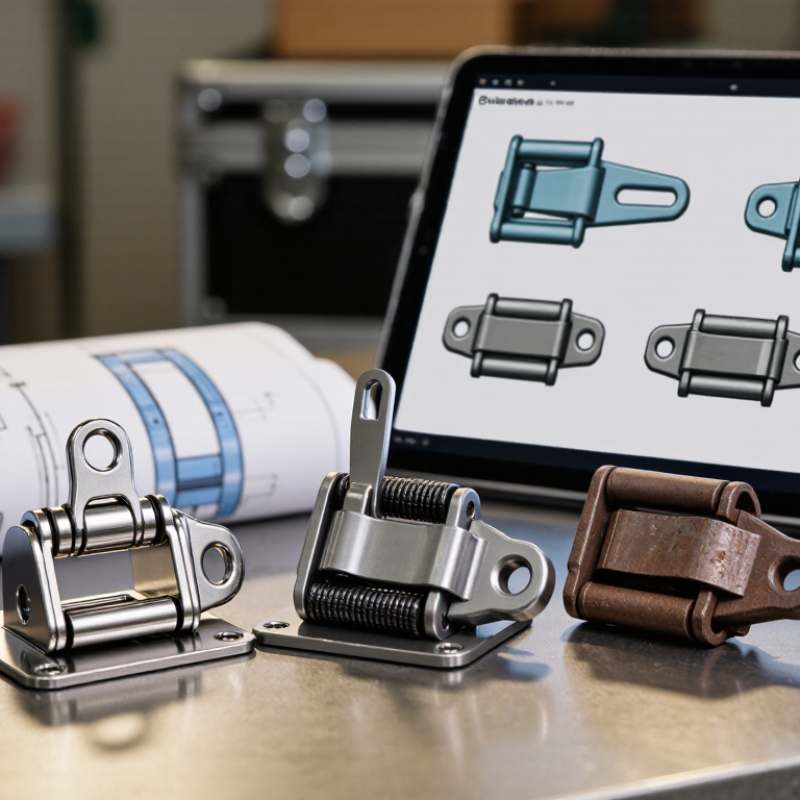
A strap latch is a fastening device that uses a flexible band to hold two parts together. One end is fixed to a surface, while the other connects to a catch or lever. Closing the lever pulls the strap tight and keeps a door, lid, or panel from swinging open. Some designs allow the strap length to be adjusted for different gaps. Simple, but useful.
In an over-center latch, the lever passes a pivot point as it closes. This creates tension and helps keep the latch shut during vibration. Other models use a buckle or adjustable hook. The strap may be rubber, fabric, or another flexible material, depending on the task and environment. A latch is not automatically suitable for every load; check its rated capacity and intended use. That detail is easy to miss.
Tips: Before fitting one, check that the mounting surfaces are firm and the catch lines up without forcing the strap sideways. Close and open it several times, then inspect for fraying, cracks, or loose screws. Replace damaged parts. I’d also recheck the fit after use, since straps can stretch a little over time.
In 2026, strap latches come in several styles, each suited to a different job. Adjustable buckle latches use a flexible strap and a simple locking buckle. They work well on tool cases, storage bins, and covers where strap length may change. Quick to adjust. For heavier closures, ratcheting strap latches tighten through repeated lever movements. A ratchet can hold a lid firmly, but it may apply too much pressure to thin panels if tightened carelessly.
Over-center toggle latches pull two surfaces together with a lever action. Some use a short strap to bridge gaps or absorb movement, making them useful on equipment enclosures and access panels. Rubber draw latches stretch over a catch, providing a snug closure and some vibration resistance. They are easy to operate with gloved hands, though rubber can age under sunlight, heat, or repeated stretching. Material matters. Stainless steel suits damp or outdoor settings, while coated metal may be adequate for indoor use. Check the working load, mounting space, strap reach, and replacement options before choosing. A latch that looks sturdy can still be a poor fit if its strap rubs against a sharp edge. That detail is easy to miss.
When comparing strap latches for 2026, start with rated holding force, not appearance. Check whether the published figure is working load, test load, or ultimate strength; these are not interchangeable. A latch that feels tight by hand may still loosen under vibration. Match its length and adjustment range to the real gap, then check hook shape, mounting-hole spacing, and release clearance. Stainless steel suits many wet settings, while plated steel may work well in dry equipment. Neither is universally best. Ask for corrosion-test documentation, such as results from ASTM B117 salt-fog testing.
Operating feel matters too. Test the latch with gloves, a loaded lid, and a slightly misaligned catch. A guarded release may help prevent accidental opening, but an overly stiff lever can be awkward. The U.S. Bureau of Labor Statistics reported 2.6 million nonfatal workplace injuries and illnesses in private industry in 2023. That figure is not specific to latch use, but it is a reminder to consider safe handling. One detail is easy to miss: a flexible mounting surface can shift force onto the screws, even with a strong latch.
Tips: Compare load ratings on the same basis, check catch alignment, and cycle the latch repeatedly before buying. Leave room for adjustment. I would not choose from catalog photos alone.
What Are the Top Strap Latches for 2026?
The best strap latches for 2026 are those matched to the job, not simply those with the highest advertised capacity. Check strap width, load direction, and exposure to grit, moisture, or vibration. Cam-style latches allow quick adjustment; ratcheting designs can provide firmer tension, but may damage delicate cargo if overtightened. Fit matters. Look for smooth edges, corrosion-resistant finishes, and a closure that remains seated when the strap twists. Before committing to a large order, test a sample through repeated opening and closing. Check the pin, spring, and webbing for wear. Small details often reveal more than a polished product description.
MHI’s 2024 Annual Industry Report found that 55% of surveyed supply-chain professionals planned to increase technology investment. The report does not rank strap latches, so this figure is context, not proof that any latch performs better. It does reinforce the value of traceable specifications and inspection records when sourcing operational equipment. Ask suppliers for clear load ratings and test documentation, then verify that the rating applies to the complete assembly—not just one component. A latch can feel solid in the hand and still be poorly matched to its strap. That is easy to overlook. For outdoor use, inspect hardware after exposure to rain and dust; a quick visual check is useful, though it cannot replace documented testing.
| Strap Latch Type | How It Secures the Strap | Best-Suited Uses | Key Advantages | Things to Check |
|---|---|---|---|---|
| Ratchet buckle | A ratcheting handle winds or tensions the webbing, then locks it in place. | Securing heavy or bulky cargo when firm tension is needed. | Allows controlled tightening and can hold substantial tension when used as part of a correctly rated assembly. | Check the strap assembly’s working load limit, webbing condition, anchor points, and buckle for wear. Avoid overtightening fragile loads. |
| Cam buckle | A spring-loaded cam grips the webbing; pressing the release lets the strap slide. | Light- to moderate-duty cargo, luggage, and general-purpose tie-downs. | Quick to adjust and release; does not require winding excess webbing around a ratchet. | Holding capacity depends on the buckle, webbing, and setup. Do not assume it is suitable for heavy cargo without checking its rating. |
| Over-center strap latch | A lever moves past its center point to draw a strap or linked fitting tight and keep it closed. | Reusable closures on cases, covers, equipment, and assemblies that need a snug hold. | Fast manual operation and a secure closed position when correctly adjusted. | Confirm the latch is designed for the application and that the lever cannot be knocked open. It is not automatically a cargo tie-down. |
| Ladder-lock buckle | Webbing is threaded through the buckle’s slots and held by friction under tension. | Adjustable straps on bags, packs, covers, and other light-duty items. | Simple, lightweight, and easy to adjust without moving parts. | Performance depends on correct threading, webbing width, and material. It is generally not a substitute for a rated cargo restraint. |
| Side-release buckle | Flexible side tabs click into a socket and are squeezed to release. | Removable straps on bags, accessories, and lightweight equipment. | Fast one-handed connection and convenient repeated release. | Check buckle compatibility and strap width. Plastic components can be affected by impact, heat, aging, or harsh environments. |
| Hook-and-loop strap closure | Overlapping hook and loop surfaces hold the strap together. | Cable bundling, organizing, and light-duty reusable fastening. | Easy to reposition and open; useful where a buckle would be bulky. | Dust, lint, moisture, and wear can reduce grip. Not intended to restrain heavy or safety-critical loads. |
Selection note: For cargo restraint, use the working load limit stated for the complete tie-down assembly and follow applicable transport requirements. The buckle alone does not determine the capacity; webbing, stitching, fittings, anchor points, and installation all matter.
Choose a strap latch by matching its mechanism to the job. Cam-buckle latches suit lighter loads and quick adjustments; ratchet latches offer greater tension but can overtighten delicate cargo. Check the complete assembly’s working load limit, not just the latch’s. For covered cargo securement, FMCSA rules require the combined working load limit of tiedowns to equal at least half the cargo’s weight. Treat that as a minimum, not a reason to ignore load shape, vibration, or sharp edges. A smooth latch helps protect webbing. So does a sleeve over a rough contact point. There is no perfect latch.
Maintenance starts with a close inspection before use. Look for bent frames, cracked welds, corrosion, burrs, and webbing that is cut, glazed, or frayed. The Web Sling & Tie Down Association’s guidance emphasizes inspecting synthetic web tiedowns and removing damaged equipment from service. Keep the latch clean and dry, and store it away from chemicals and direct sunlight. Test the release without a load; it should move freely and engage securely. I still find small burrs easy to miss, especially in poor light. A quick wipe helps, but it cannot make damaged gear safe. Replace questionable parts, and follow the maker’s rated-load and care instructions.
Choose a latch style that suits the job—such as a cam buckle for lighter-duty adjustment or a ratchet buckle for higher tension—and always verify the complete strap assembly’s working load limit and intended use. Follow the manufacturer’s inspection and care instructions.
How to read this chart: Counts represent the checks listed for each occasion, not a safety rating or a required inspection schedule. Before use, check the webbing, stitching, latch operation, anchor points, and rating label. After exposure to moisture or salt, rinse, dry, and inspect for corrosion. During periodic checks, look for cracks, deformation, loose hardware, and unreadable labels. Remove damaged equipment from service.