What are Twin Shaft Mixers and How Do They Work?
Twin Shaft Mixers are vital in the construction and manufacturing sectors. These mixers provide efficient and consistent blending for various materials. According to recent industry reports, the demand for Twin Shaft Mixers has increased significantly, with a growth forecast of over 6% annually through 2025.
The technology behind Twin Shaft Mixers allows for thorough mixing with minimal energy consumption. They typically feature two parallel shafts that rotate in opposite directions. This design enhances material movement and ensures an even distribution of components. Moreover, the durability and reliability of these mixers make them a preferred choice in many applications.
However, it is essential to recognize that not all Twin Shaft Mixers are created equal. Variations in design and materials can affect performance. There are instances where users report inadequate mixing results due to poor configuration or machine maintenance. Thus, understanding the specific needs and limitations of Twin Shaft Mixers is crucial for achieving optimal performance.
What is a Twin Shaft Mixer?
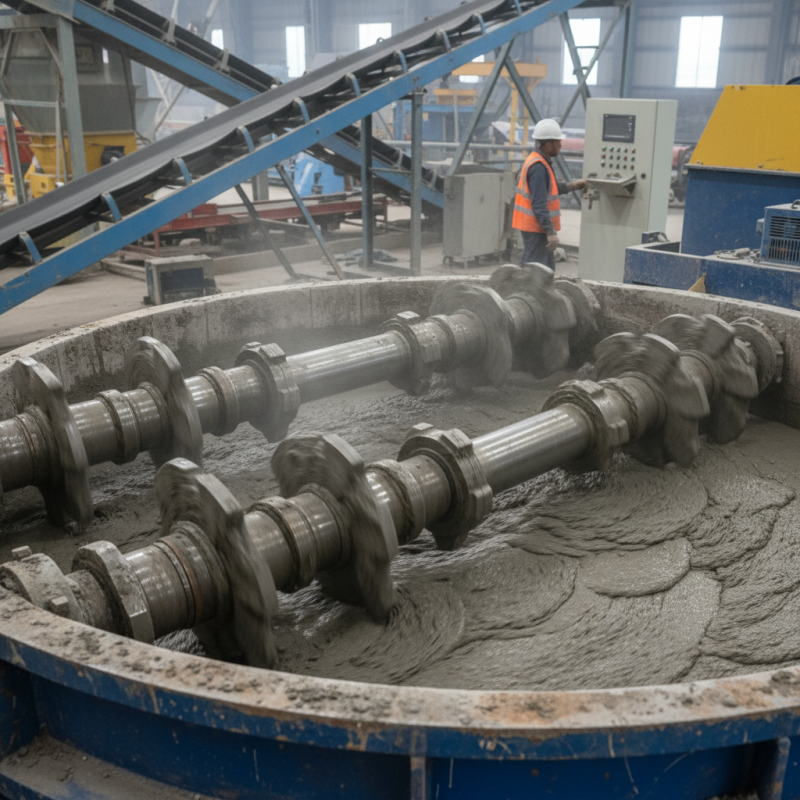
A twin shaft mixer is a powerful machine used for blending various materials. It features two parallel shafts equipped with multiple mixing blades. This design allows for efficient mixing by generating turbulence and thorough material movement. The large mixing capacity makes it ideal for batching plants in construction and other industries.
These mixers can blend dry or wet substances effectively. The simultaneous rotation of the shafts leads to a highly homogenous mix. As the materials are introduced, they are pushed outward and then pulled back in, creating a continuous cycle. This motion ensures that even the densest mixtures achieve a uniform consistency.
However, challenges exist in operating twin shaft mixers. The initial setup can be complex. It's crucial to adjust settings according to the specific materials being mixed. If the materials do not blend well, it can lead to inconsistencies and inefficiencies. Regular maintenance is also essential; worn blades can impact performance. Understanding these aspects can help ensure optimal mixing results.
Twin Shaft Mixer Performance Comparison
Key Components of Twin Shaft Mixers
Twin shaft mixers are essential in various industries, especially in construction and manufacturing. Understanding their key components helps in appreciating their functionality.
At the heart of twin shaft mixers are two horizontal shafts equipped with mixing blades. These blades rotate in opposite directions, effectively blending materials with high efficiency. This design allows for better mixing of viscous and dry materials, accommodating various applications.
Another significant component is the mixing chamber. It is designed to handle large volumes of materials while preventing dead zones. Advanced models feature a wear-resistant lining, ensuring durability and longevity. According to industry reports, twin shaft mixers can achieve homogeneity in mixing within just a few minutes. This quick processing time is crucial in maintaining production timelines.
The control system is equally vital. Modern mixers include automated controls for adjusting mixing speed and duration. This adaptability ensures optimum results regardless of material type. However, not all operators optimize settings properly, leading to inconsistent mixtures. Training and proper maintenance are often overlooked. Addressing these issues can significantly improve mixing quality and operational efficiency.
How Twin Shaft Mixers Operate
Twin shaft mixers are vital in various industries, including construction and food processing. Their operation centers on two parallel shafts that rotate in opposite directions. This design enables efficient mixing of dry and wet materials. A key benefit of twin shaft mixers is their ability to produce uniform mixtures quickly. According to industry reports, these mixers can achieve thorough blending in as little as 30 seconds, depending on the material type.
The mixing process begins when materials enter the mixer. As the shafts turn, heavy-duty blades create a swirling motion. This action ensures that all components are evenly distributed. However, it’s crucial to monitor the mixer closely. Inconsistent feed rates can lead to fragmentation within the mixture, affecting quality. The importance of maintaining optimal operating conditions cannot be overstated. Equipment wear might also occur over time, leading to less efficient mixing.
Despite their advantages, twin shaft mixers are not perfect. Operators may encounter challenges in handling sticky materials. These materials can create buildup on the mixer walls, requiring frequent cleaning. Such maintenance practices can disrupt production and impact efficiency. Additionally, not all mixtures are compatible with twin shaft technology. Understanding these limitations is essential to maximize the benefits of these mixers.
Applications of Twin Shaft Mixers in Various Industries
Twin shaft mixers are increasingly used across numerous industries due to their efficiency and versatility. In the construction sector, for instance, they play a vital role in producing concrete. The American Concrete Institute (ACI) reports that proper mixing significantly enhances the strength of concrete. This is crucial for large-scale projects, where even minor variations can lead to structural failures.
Food processing is another industry benefiting from twin shaft mixers. These machines can uniformly blend ingredients, ensuring consistent quality. The International Food and Beverage Association highlights that uniform mixing in this sector not only improves product quality but also helps comply with regulatory standards. However, achieving the ideal mixture can be challenging. Each ingredient behaves differently, making it essential to know their properties.
The pharmaceutical industry also relies on twin shaft mixers for producing solids and semi-solids. Accurate mixing is crucial here to ensure the correct dosage of active ingredients. According to PhRMA, even small discrepancies can affect patient safety. These challenges highlight the need for continuous improvement and innovation in mixing technologies. The industry's reliance on precise blending makes high-quality equipment essential.
What are Twin Shaft Mixers and How Do They Work? - Applications of Twin Shaft Mixers in Various Industries
| Industry | Application | Key Features | Benefits |
| Construction | Concrete Mixing | High efficiency, homogeneous mixing | Enhanced strength and durability |
| Food Processing | Dough Preparation | Gentle mixing and temperature control | Consistent product quality |
| Chemical | Polymer Mixing | High shear mixing, short mixing times | Improved chemical reaction rates |
| Pharmaceutical | Powder Blending | Precise ingredient incorporation | Consistency in dosage and efficacy |
Advantages of Using Twin Shaft Mixers
Twin shaft mixers have become increasingly popular in various industries due to their unique design and operational efficiency. These mixers utilize two parallel shafts, each equipped with mixing blades that rotate in opposite directions. This configuration allows for rapid and homogeneous mixing of materials, making it ideal for applications like concrete production and asphalt mixing.
One significant advantage of twin shaft mixers is their ability to handle a wide range of materials. They can effectively mix dry, wet, and viscous substances. This versatility saves time and reduces operational costs. Additionally, their design minimizes segregation of components during mixing, ensuring a consistent final product. Users can expect improved quality control and reduced waste.
Tip: Regular maintenance is crucial for optimal performance. Check the wear on mixing blades frequently to avoid uneven mixing.
Another benefit is their energy efficiency. Twin shaft mixers can operate at lower power consumption rates than traditional mixers. This can lead to cost savings over time. However, understanding the specific needs of your materials is essential. Not all mixers perform equally well with every batch.
Tip: Conduct small-scale tests before full-scale production to gauge the mixer's performance.
In summary, twin shaft mixers offer significant advantages in efficiency, versatility, and energy savings. They play a vital role in various industries, enabling high-quality mixing while reducing operational costs.