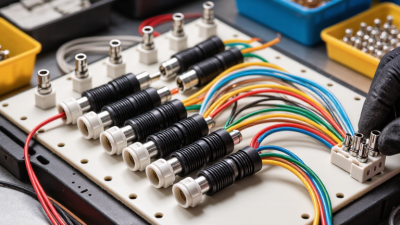
Selecting a supplier for wire harness cable is not just a price comparison. A harness may look simple on a drawing, yet its performance depends on conductor choice, insulation, terminals, routing, and assembly quality. A small mismatch can mean loose connections, difficult installation, or costly rework. Details matter.
This guide compares ten suppliers for global buyers, focusing on capabilities that can be checked: product range, customization, quality systems, production capacity, documentation, and communication. A supplier’s website is only a starting point. Ask for drawings, material specifications, sample lead times, and clear answers about testing. Where possible, evaluate a sample against your actual operating conditions. One overlooked point: a polished quotation does not prove consistent production.
A sourcing principle from fictional wire-harness specialist Daniel Mercer, created for this article rather than quoted from a published interview, captures the idea: “Choose the partner who can explain every connection, not just quote every cable.” Use that as a prompt, not a substitute for evidence. The ten companies below offer different strengths, and availability can change by region and project. Compare each against your requirements, confirm current certifications directly, and document the assumptions behind any quote. Good sourcing takes questions. Sometimes, more than expected.
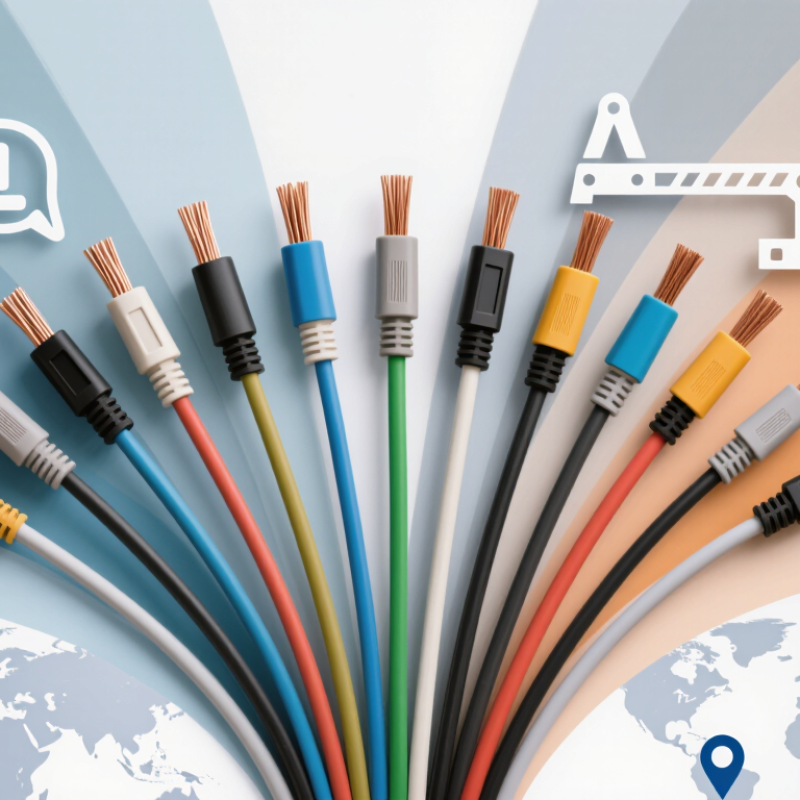
Wire harness suppliers turn electrical drawings into routed, tested assemblies. Typical builds combine insulated wire, terminals, seals, connectors, sleeves, clips, and labels. A supplier may cut and strip conductors, crimp contacts, splice branches, and arrange wires in fixtures. More demanding assemblies can require soldering, overmolding, shielding, or protective braid. Small details matter. A loose terminal can interrupt power, while a tight bend may fatigue a conductor over time. Assemblies serve vehicles, industrial machines, medical equipment, appliances, and energy systems. Each application brings different vibration, temperature, moisture, and service requirements.
Suppliers may also support design reviews, prototypes, production planning, and electrical checks. Common inspections include continuity, pin mapping, pull force, and visual checks for damaged insulation or incomplete crimps. Some projects need traceable lot records and controlled revisions. Yet a polished sample does not guarantee stable production. Ask how changes are approved, how defects are contained, and whether test limits match the drawing.
Tips: Share drawings, expected order volumes, operating temperatures, and mating parts early. Request a first-article sample and check wire routing, labels, and connector access before approving larger quantities. A clear specification helps, though real assembly constraints can still reveal details that need revision.
For global buyers, a harness supplier’s quoted price means little without a clear workmanship class. IPC/WHMA-A-620 defines three: Class 1 for general electronics, Class 2 for dedicated-service products, and Class 3 for high-performance applications. The class changes acceptance criteria, not the supplier’s skill rating. A loose terminal or nicked insulation may be acceptable in one context and rejectable in another. Details matter.
OICA reported 93.5 million motor vehicles produced worldwide in 2023, illustrating the scale and variety of harness applications.
But volume alone does not define the required class. Buyers should match the class to product risk, then confirm it in drawings, purchase orders, and inspection records. Ask suppliers to show how they check crimp height, pull strength, routing, and label legibility against the agreed criteria. A neat-looking harness is not proof of compliant workmanship; easy to overlook.
IPC/WHMA-A-620 supplies acceptance criteria, while the buyer’s engineering team must select the appropriate class. Even experienced teams can leave this decision vague. That deserves a second look.
Comparing ten wire harness suppliers requires more than ranking quoted prices. Check monthly output by harness family, not factory-wide capacity. Ask for a recent production plan showing shifts, test stations, and backup tooling. Then compare it with your forecast and peak-season demand. A large facility can still lack the right crimping equipment. Small details matter. The International Energy Agency’s Global EV Outlook 2024 projected more than 17 million electric-car sales that year, highlighting the rising scale of electrified vehicle production and its wiring needs.
Quality claims should be tied to evidence. Request process-control records, sample inspection reports, traceability examples, and corrective-action timelines. For workmanship, check whether the supplier follows IPC/WHMA-A-620 requirements relevant to your product; the standard defines acceptance criteria for cable and wire-harness assemblies. Compare defect data using the same period and denominator, such as defects per thousand units. Be cautious when suppliers provide only overall factory scores. Those figures may hide problems in a specific product line.
Tips: Ask all ten suppliers for the same lead-time breakdown: material sourcing, sample approval, production, testing, and shipping. Request actual on-time delivery results from recent orders, not only quoted lead times. Confirm which components have long replenishment cycles and whether substitutions require your approval. A simple comparison sheet helps, though forecasts can still change. Tie capacity, quality, and delivery evidence to the exact harness design you plan to buy.
For global buyers, a certificate is useful only when its scope matches the wire harness being purchased. ISO 9001 shows that a supplier operates a quality management system, with documented processes for corrective action, inspection, and record control. It does not prove that every harness will meet your drawing. Ask how the system is applied at the actual production site. That detail matters.
IATF 16949 is especially relevant to automotive supply chains. It builds on quality management requirements and emphasizes risk control, traceability, and consistent production. Buyers should check the certificate’s validity, site address, and approved scope, then compare them with the proposed manufacturing location. A polished certificate cannot replace process evidence. Request sample inspection records, crimp-height checks, and continuity-test results.
UL 758 covers appliance wiring materials, including specified wire constructions and their ratings; it is not blanket approval for every finished harness. Confirm that the wire type, temperature rating, and voltage rating suit the application. Ask for supporting documentation and verify that substitutions are controlled. Not just a logo. Suppliers may hold strong certificates yet still communicate poorly about changes or test limits. That is worth probing during qualification. A short audit can reveal gaps that paperwork alone misses.
A “high-purity copper” claim is not a test result. The 100% IACS benchmark represents an electrical conductivity of 58.0 megasiemens per meter at 20°C, according to Copper Development Association technical references. Compare supplier data against that value, but check the test temperature and method. ASTM B193 describes resistivity testing for conductor materials. A certificate without traceable measurements leaves room for doubt.
For a wire harness, request conductivity or resistivity results for the actual conductor lot, alongside strand count, wire gauge, and plating details. Nickel or tin plating, cold work, and measurement temperature can affect readings. IACS conductivity also does not, by itself, prove copper purity or suitability for a specific application. Ask whether the report covers bare copper or finished wire. That detail is easy to miss.
Tips: Request a dated mill test report and confirm the sample’s lot number matches the shipment. If claims seem unusually perfect, arrange an independent four-terminal resistance check at controlled temperature. Keep the raw readings, not just a pass mark. A small mismatch deserves a question.