Top 10 Harness Assembly Suppliers for Global Buyers?
Global buyers are rethinking how they source harness assembly. Electrification is accelerating this shift. The International Energy Agency reported nearly 14 million electric cars were sold worldwide in 2023, representing about 18% of new-car sales. Each vehicle can require more high-voltage circuits, signal paths, shielding, and customized connectors.
That growth changes supplier selection. A low quotation is not enough. Buyers must examine crimp-force control, terminal traceability, automated testing, and change-management discipline. IPC/WHMA-A-620 remains a widely recognized reference for cable and wire harness workmanship. ISO 9001 certification also helps, but certification alone does not prove consistent production. Factory evidence matters more.
This guide reviews ten harness assembly suppliers serving international buyers. The comparison considers manufacturing scale, engineering support, quality systems, prototype capability, lead times, and experience with automotive, industrial, medical, and energy applications. Industry analyses from Grand View Research and MarketsandMarkets continue to identify wiring harness demand as a growth market, driven by vehicle electronics, renewable energy, and connected equipment. Regional supply-chain data also shows why dual sourcing deserves attention. One plant may offer excellent pricing, yet face port delays or limited surge capacity.
A ranking is never perfect. Supplier performance can change quickly. Buyers should still request sample builds, process-flow documents, test records, and recent customer references. Small details matter, such as a labeled branch point or a properly locked terminal. The best supplier is not always the largest. It is the one that can repeatedly deliver the required harness assembly, documentation, and responsiveness under real production pressure.
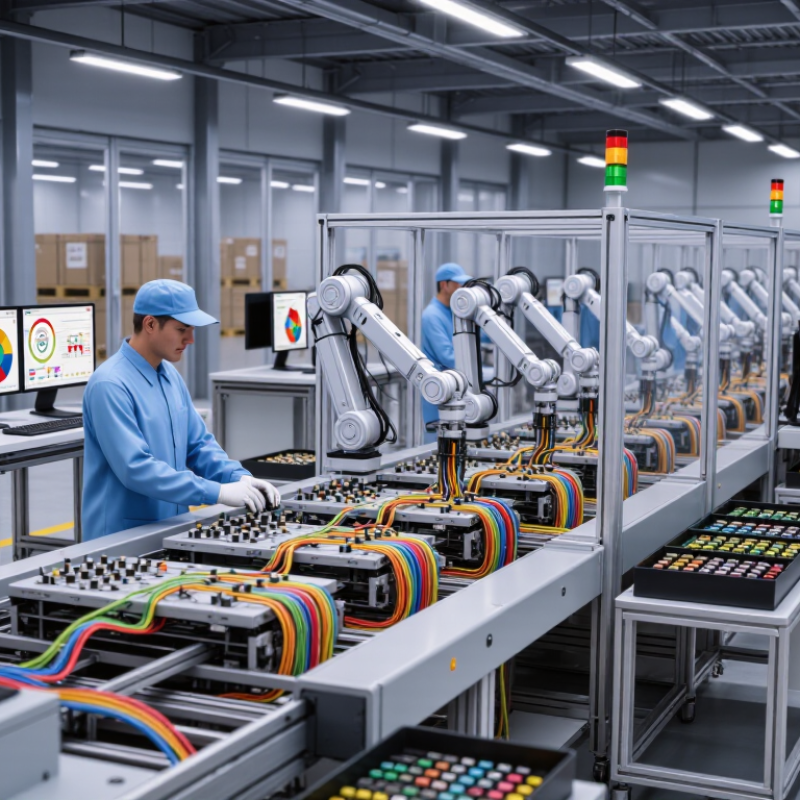
What Harness Assemblies Are and Where They Are Used
Top 10 Harness Assembly Suppliers for Global Buyers?
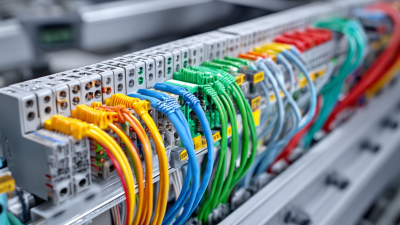
A harness assembly is a prepared group of wires, terminals, connectors, sleeves, and protective coverings. It carries power or signals between separate components. Each wire follows a defined route, often inside a vehicle, machine, cabinet, or medical device. The assembly may include labels, clips, seals, heat-shrink tubing, and braided protection.
In practical production, technicians cut wires to measured lengths, strip insulation, crimp terminals, and test every circuit. Small errors matter. A loose crimp can create heat, vibration damage, or an intermittent fault. Visual checks help, but continuity and pull-force tests provide stronger evidence. Wire color alone is not enough. Drawings, pin maps, and revision records must agree.
Harness assemblies appear in automobiles, industrial robots, construction equipment, aircraft interiors, renewable-energy systems, and laboratory instruments. In a control cabinet, they reduce tangled wiring and simplify maintenance. Inside a vehicle door, flexible sections must survive repeated movement. Outdoor equipment needs sealing against moisture, dust, and temperature changes. High-current designs require suitable conductor size and secure terminals.
Global buyers should examine material traceability, inspection records, testing methods, and change-control procedures. A lower quoted price may hide extra assembly work or weak documentation. That assumption deserves review. Some designs look simple but require difficult routing around sharp edges and moving joints. Experienced suppliers usually confirm drawings, samples, tolerances, and operating conditions before production begins. Yet even a careful process can miss an unclear specification, so direct technical communication remains essential.
Top 10 Harness Assembly Suppliers for Global Buyers? - What Harness Assemblies Are and Where They Are Used
| Rank | Anonymous Supplier Profile | Primary Production Region | Main Harness Types | Typical End-Use Markets | Typical Voltage Range | Common Temperature Range | Typical Quality and Compliance Scope | Customization Capability |
|---|---|---|---|---|---|---|---|---|
| 1 | High-Volume Automotive Harness Specialist | East Asia and Southeast Asia | Engine harnesses Body harnesses Door harnesses | Passenger vehicles, commercial vehicles, electric vehicles and vehicle interiors | 12 V and 24 V low-voltage systems; selected high-voltage assemblies up to approximately 1,000 V DC | Approximately −40°C to +125°C, depending on cable, connector and protective material | Automotive process controls, electrical continuity testing, crimp-force monitoring and production traceability | High-volume, vehicle-platform and model-specific designs |
| 2 | Industrial Control and Automation Harness Specialist | Central Europe | Control-panel wiring Servo cable assemblies Sensor harnesses | Factory automation, robotics, machine tools and process-control equipment | Typically 24 V DC control circuits; power assemblies commonly rated from 300 V to 1,000 V AC/DC | Commonly −20°C to +80°C; higher ratings available for selected industrial cables | IPC/WHMA-A-620 workmanship practices, insulation testing, continuity testing and documented wiring verification | High-mix, low-to-medium volume and drawing-based production |
| 3 | Aerospace and Defense Cable Assembly Specialist | North America and Western Europe | Lightweight harnesses Avionics assemblies Shielded cable assemblies | Aircraft systems, military equipment, navigation systems and mission electronics | Typically 28 V DC aircraft systems; selected assemblies support higher AC or DC voltages | Approximately −55°C to +125°C or higher for specialized applications | Controlled configuration management, inspection records, shielding checks, hipot testing and aerospace-quality procedures | Very high customization, low-volume and tightly documented production |
| 4 | Medical Equipment Harness Specialist | Western Europe and East Asia | Patient-monitor cables Imaging-system harnesses Medical power leads | Patient monitoring, diagnostic imaging, laboratory equipment and surgical systems | Signal and control circuits commonly below 60 V; equipment power assemblies often rated at 250 V AC or higher | Commonly 0°C to +60°C for indoor medical equipment; special assemblies may support wider ranges | Biocompatibility and clean-production requirements where applicable, electrical safety testing and controlled documentation | High customization with emphasis on ergonomics, cleanability and repeatability |
| 5 | Renewable Energy and Battery Harness Specialist | China, Southeast Asia and Eastern Europe | Battery harnesses Energy-storage wiring Solar equipment cables | Electric vehicles, battery energy storage, solar inverters and charging equipment | Low-voltage signal circuits from 12 V to 48 V; power assemblies commonly from 400 V to 1,500 V DC | Typically −40°C to +105°C; outdoor and battery applications may require higher environmental resistance | High-voltage isolation checks, insulation-resistance testing, polarity verification and thermal-management controls | Medium-to-high customization with cell, module and pack-level options |
| 6 | Heavy Equipment and Off-Highway Harness Specialist | North America, Europe and India | Cab harnesses Chassis harnesses Hydraulic-control wiring | Construction machinery, agricultural equipment, mining vehicles and material-handling equipment | 12 V and 24 V systems; selected electric machines use higher-voltage battery and drive circuits | Approximately −40°C to +125°C, with abrasion, oil, dust and vibration protection often required | Continuity and insulation testing, connector sealing checks, vibration-resistant routing and environmental validation | High customization for rugged routing, protective sleeving and harsh environments |
| 7 | Telecommunications and Data-System Harness Specialist | East Asia and Southeast Asia | Data cables Rack harnesses Power distribution leads | Server equipment, network infrastructure, telecommunications cabinets and data centers | Commonly 12 V, 24 V and 48 V DC power systems; data assemblies are selected according to interface and transmission requirements | Typically 0°C to +70°C for controlled indoor installations | Signal-integrity testing where required, polarity checks, bend-radius control and cable-length verification | High-volume repeat production and rack-specific configuration |
| 8 | Rail and Transportation Harness Specialist | Western Europe and Central Europe | Rolling-stock harnesses Door-system cables Passenger-information wiring | Rail vehicles, metro systems, locomotives and transportation infrastructure | Control circuits commonly 24 V to 110 V DC; traction and auxiliary power assemblies may use substantially higher voltages | Approximately −40°C to +85°C, with smoke, fire and vibration performance often specified | Railway fire-and-smoke documentation, vibration resistance, insulation testing and controlled product configuration | High customization for long service life and restricted installation spaces |
| 9 | Consumer and Commercial Electronics Harness Specialist | East Asia and South Asia | Internal wire sets Display cables Small electromechanical assemblies | Appliances, office equipment, displays, commercial electronics and small appliances | Signal and control circuits commonly below 60 V; mains assemblies commonly rated at 125 V or 250 V AC | Typically 0°C to +70°C; appliance-specific designs may require wider temperature capability | Automated continuity testing, terminal retention checks, polarity verification and production sampling controls | High-volume, compact and cost-sensitive customization |
| 10 | Custom Prototyping and Low-Volume Harness Specialist | North America, Europe and South Asia | Prototype harnesses Test fixtures Engineering change builds | Research equipment, robotics, laboratory systems, new mobility and product development | Application-specific; commonly ranges from low-voltage signal wiring to 600 V or higher power assemblies | Application-specific, commonly −40°C to +105°C when industrial-grade materials are selected | Drawing review, first-article inspection, electrical testing, bill-of-material control and engineering change management | Very high flexibility for prototypes, pilot runs and complex mixed-connector designs |
Related Posts
-
10 Best Cable Wire Harness Assembly Suppliers?
-
China Top Wire Harness Engineering Manufacturers?
-
Top Cable Wire Harness Assembly Manufacturers
-

How to Choose the Right Harness Manufacturing Partner?
-
Global Sourcing of Premium Electronic Wire Harnesses: China's Quality Leads the Way
-
How to Choose the Right Cable Harness Manufacturing Partner?