Top Cable Wire Harness Assembly Manufacturers

Choosing among top cable wire harness assembly manufacturers requires more than comparing prices or polished websites. A dependable supplier should demonstrate controlled production, qualified technicians, traceable materials, and consistent inspection records. This guide examines manufacturers through those practical standards, not marketing language alone. Details matter.

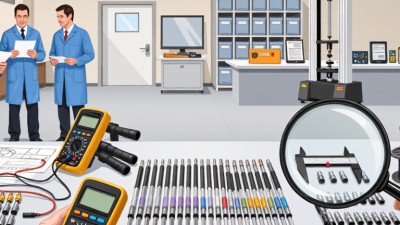
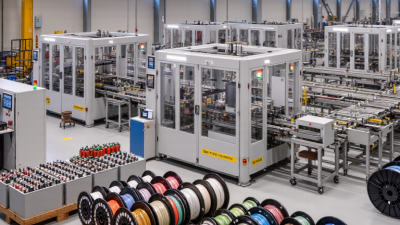
A strong partner can explain its wire specifications, terminal compatibility, crimping methods, and testing procedures. Look for evidence such as pull-force results, continuity checks, insulation reviews, and clear labeling on finished harnesses. Factory photographs may show organized workstations, calibrated tools, and sample boards, but images are not proof by themselves. Request current documentation and representative samples.

The best manufacturers also communicate clearly during design changes. They should review drawings, identify assembly risks, and confirm tolerances before production begins. Small details, such as bend radius and connector locking, can affect installation reliability. That is not enough. Delivery performance, corrective-action records, and after-sales support deserve equal attention.

This overview considers suppliers serving automotive, industrial, medical, consumer, and equipment applications. Requirements vary widely, so one manufacturer may not fit every project. A supplier with excellent volume capacity may lack flexibility for prototypes. Another may offer careful customization but need longer lead times. These trade-offs deserve honest review. By comparing engineering capability, quality control, production capacity, certifications, communication, and customer evidence, buyers can create a more reliable shortlist for cable wire harness assembly projects. Suppliers should be judged by repeatable performance, not impressive claims.

Top Cable Wire Harness Assembly Manufacturers

Definition and Scope of Cable Wire Harness Assembly Manufacturers

Cable wire harness assembly manufacturers design, build, and verify grouped wires, terminals, connectors, sleeves, and protective coverings. Their work turns separate conductors into a tested connection system. The scope may include engineering drawings, material selection, wire cutting, stripping, crimping, soldering, labeling, and electrical testing. Some manufacturers also provide prototypes, low-volume builds, and full production support. It is more than cable cutting.

Industry reports show why this field matters. Grand View Research estimates that the global cable assembly market will expand steadily through 2030, supported by vehicles, industrial equipment, medical devices, and communication systems. MarketsandMarkets also identifies automation and miniaturized electronics as major demand factors. These trends require tighter tolerances and better traceability. IPC/WHMA-A-620 remains a key workmanship reference for cable and wire harness assemblies, covering crimp quality, soldering, routing, and acceptance criteria.

The boundary is not always clean. A manufacturer may only assemble components, while another handles design validation and supply planning. Buyers should examine process records, conductor specifications, pull-force results, and continuity-test data. A neat harness can still contain a weak crimp. That detail is easy to miss. Reliable manufacturers therefore combine trained operators, calibrated equipment, documented inspections, and repeatable testing. Certifications help, but they do not replace production evidence. Mistakes happen, and transparent corrective-action records often reveal more than polished claims.

Cable Wire Harness Assembly Scope: 2023 Vehicle Production by Region

Regional vehicle production provides a transparent demand indicator for cable wire harness assembly manufacturers because vehicles rely on multiple low-voltage and high-voltage harness systems for power distribution, signal transmission, control units, lighting, and safety functions. Asia and Oceania represented the largest production base in 2023, followed by Europe and the Americas.

Source: International Organization of Motor Vehicle Manufacturers (OICA), 2023 production statistics. Values are total vehicles produced.

Core Products and Manufacturing Capabilities

Top Cable Wire Harness Assembly Manufacturers

Core Products and Manufacturing Capabilities

Reliable cable harness manufacturers produce wire assemblies for vehicles, industrial equipment, medical devices, and control systems. Their core products include single-ended leads, multi-branch harnesses, ribbon cables, sensor cables, and sealed assemblies. Each design may require different terminals, insulation, shielding, or strain relief.

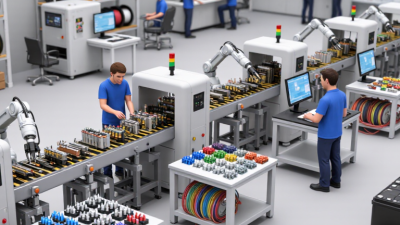
Manufacturing usually begins with automated wire cutting and stripping. Crimping machines then attach terminals with controlled force. Skilled technicians inspect crimp height, conductor placement, and pull strength. Heat-shrink tubing, braided sleeving, labels, and protective conduits improve durability. Some facilities also provide ultrasonic welding, overmolding, and custom connector integration.

Testing separates a dependable assembly from an attractive sample. Electrical testers check continuity, resistance, shorts, and incorrect wiring. Visual inspection remains important, especially around small terminals and tight bends. Traceability records can connect each harness to materials, tooling, operators, and inspection results. I have found that clear work instructions reduce repeated defects, although they never remove human judgment.

No process is flawless. A connector can pass a basic test yet fail after vibration, moisture, or repeated flexing. Strong manufacturers validate designs with cycle testing, insulation checks, and application-specific trials. They also review failed samples honestly. That habit matters. Cost, speed, and quality often compete, so capable suppliers explain those trade-offs before production begins.

Key Industries Served by Leading Harness Manufacturers

Top Cable Wire Harness Assembly Manufacturers: Key Industries Served by Leading Harness Manufacturers

Leading cable wire harness manufacturers support industries where signal integrity, safety, and repeatable assembly matter. Automotive production remains a major market. Fortune Business Insights estimated the global automotive wiring harness market at USD 84.34 billion in 2023. The report projects continued growth through 2032, driven by vehicle electronics, electric platforms, and advanced driver systems.

Electric vehicles require compact harnesses with high-voltage insulation and controlled bend radii. Aerospace programs demand lightweight assemblies, traceable materials, and strict inspection records. Medical equipment uses harnesses for imaging systems, patient monitors, and laboratory devices. In these applications, a loose terminal can interrupt critical equipment. Details matter.

Industrial automation is another important sector. Factories use harnesses in robots, control cabinets, sensors, and machine-vision equipment. The International Federation of Robotics reported 541,302 industrial robots were installed worldwide in 2023. That installation volume increases demand for flexible, labeled, and serviceable cable assemblies. A harness manufacturer must understand routing, vibration, shielding, and connector retention, not just cutting and crimping.

Renewable energy and telecommunications also need durable assemblies. Solar inverters, battery storage systems, and network equipment often operate under heat, moisture, or vibration. IPC/WHMA-A-620 provides widely recognized workmanship requirements for cable and wire harness assemblies. Compliance supports consistency, but it does not replace application testing. A neat drawing can still hide a service problem. This assumption deserves review.

Top Cable Wire Harness Assembly Manufacturers - Key Industries Served by Leading Harness Manufacturers

Industry Served Typical Harness Applications Common Cable and Wire Types Key Performance Requirements Common Assembly and Test Controls
Automotive and Commercial Vehicles Power distribution, engine controls, body electronics, lighting, infotainment, battery systems and charging interfaces Automotive primary wire, shielded data cable, high-voltage cable, twisted-pair cable and battery cable Resistance to vibration, abrasion, fluids, temperature cycling and electromagnetic interference; reliable low- and high-voltage insulation Continuity and resistance testing, crimp-height checks, pull-force testing, terminal-position inspection and high-voltage insulation testing
Industrial Automation and Robotics Control cabinets, robotic arms, sensors, actuators, motion systems, machine tools and factory networks Flexible control cable, servo cable, drag-chain cable, sensor cable, Ethernet cable and multi-core cable High flex life, torsion resistance, oil resistance, bending performance, signal integrity and protection from electrical noise Point-to-point continuity, shield termination verification, conductor resistance, insulation resistance and bend-cycle validation
Aerospace and Defense Avionics, navigation, communications, cockpit systems, power distribution, radar and mission equipment Lightweight multi-core wire, coaxial cable, high-speed data cable, shielded cable and high-temperature wire Low weight, high reliability, flame resistance, resistance to vibration and harsh environments, controlled impedance and electromagnetic shielding Dimensional inspection, crimp validation, insulation resistance, dielectric withstand, shielding checks and documented traceability
Medical Equipment Patient monitoring systems, imaging equipment, surgical devices, diagnostic instruments and laboratory equipment Medical-grade multi-core cable, shielded signal cable, silicone cable, coiled cable and low-noise cable Biocompatibility where applicable, cleanability, flexibility, low electrical noise, chemical resistance and dependable signal transmission Continuity testing, leakage-current-related checks where required, visual inspection, connector retention testing and lot traceability
Renewable Energy and Energy Storage Solar array connections, inverters, battery packs, battery-management systems and wind-turbine controls Photovoltaic cable, flexible battery cable, high-voltage cable, control cable and outdoor-rated multi-core cable UV resistance, weather resistance, thermal stability, high-voltage insulation, moisture resistance and long service life Polarity checks, continuity testing, insulation resistance, crimp pull testing, connector locking inspection and thermal verification
Telecommunications and Networking Data centers, network cabinets, wireless infrastructure, broadband equipment and communications racks Copper twisted-pair cable, coaxial cable, fiber-optic cable, patch assemblies and shielded data cable Controlled impedance, low insertion loss, low crosstalk, bend performance, shielding effectiveness and accurate connector termination Wire-map testing, attenuation testing, return-loss testing, optical-loss testing, polarity verification and connector end-face inspection
Rail Transportation Traction systems, passenger information, doors, braking controls, lighting and onboard communications Railway-rated multi-core cable, shielded control cable, power cable and fire-performance cable Fire safety, low smoke and low toxicity where specified, vibration resistance, mechanical durability and electrical reliability Continuity checks, insulation testing, crimp inspection, shielding verification, dimensional checks and flame-performance documentation
Consumer and Commercial Electronics Displays, appliances, computers, office equipment, charging devices and electronic control modules Ribbon cable, discrete wire assemblies, USB and data cable, miniature coaxial cable and low-voltage cable Compact form factor, accurate routing, controlled electrical performance, flame resistance and consistent connector fit Continuity testing, polarity testing, dimensional inspection, connector retention checks and visual workmanship inspection
Marine and Offshore Equipment Navigation, propulsion controls, lighting, communications, monitoring systems and deck machinery Marine-grade multi-core cable, tinned copper cable, shielded control cable and water-resistant power cable Salt-water resistance, moisture resistance, corrosion resistance, vibration tolerance, flame performance and long-term insulation stability Continuity and insulation testing, terminal crimp inspection, sealing verification, pull testing and corrosion-control checks
Note: Requirements vary by product design, installation environment, voltage level and applicable regulations. Common reference frameworks include IPC/WHMA-A-620 for cable and wire harness workmanship, ISO 6722 for road-vehicle cables, IEC 60228 for conductor classes and IEC 60332 for flame-performance testing.

Quality Standards, Testing Methods, and Compliance Requirements

For cable wire harness assembly manufacturers, compliance begins with controlled materials, drawings, and repeatable workmanship. IPC/WHMA-A-620 defines acceptance criteria for crimping, soldering, insulation, and cable routing. A 2024 Grand View Research report estimated the global automotive wiring harness market at USD 57.74 billion in 2023. It also projected a 6.9% compound annual growth rate through 2030. That scale increases pressure on suppliers to prove every process, not merely promise quality.

Testing should match the harness’s real operating environment. Technicians commonly perform continuity, insulation-resistance, hipot, pull-force, and crimp cross-section tests. IEC 60512 methods support connector durability and electrical performance checks.

Thermal cycling, vibration, moisture, and salt-spray testing expose weaknesses that visual inspection misses. Small defects matter. A clean-looking crimp is not proof of sufficient conductor compression.

Manufacturers should retain lot numbers, operator records, test results, and calibration certificates. ISO 9001 supports this traceability, while IATF 16949 may apply to automotive production. However, certification alone cannot replace process evidence.

In practice, documentation sometimes lags behind engineering changes, creating avoidable compliance risk. A stronger audit compares the approved drawing, production sample, test data, and shipment record line by line. Calibration intervals also deserve review; an expired tester can invalidate otherwise convincing results.

How to Evaluate and Select a Cable Harness Assembly Manufacturer

Selecting a cable harness assembly manufacturer requires more than comparing unit prices. A 2024 Grand View Research report estimates the global cable assembly market will grow at about 6.6% annually through 2030. That growth increases supplier pressure, but it does not prove production maturity. Ask for evidence of process capability, not polished presentations.

Review compliance with IPC/WHMA-A-620 requirements, then inspect actual records. Check crimp-height measurements, pull-test results, first-article approvals, and lot-level traceability. A capable supplier should explain wire stripping tolerances and connector insertion-force limits clearly. Request sample harnesses built from your drawings. Look closely at terminals, labels, bend radii, and strain relief.

Test the process.

Evaluate defect data over time. A useful supplier can show first-pass yield, rework rates, corrective-action response, and delivery performance. The 2024 State of Manufacturing reports from industry research groups continue to identify supply-chain visibility as a major operational concern. Therefore, confirm how materials are approved, stored, and substituted. One overlooked issue is engineering change control; an undocumented terminal replacement can create field failures.

Factory audits are valuable, but they are not perfect. A clean audit may still miss operator fatigue during a night shift. Ask to observe production at different times, interview quality staff, and verify calibration certificates independently. Pricing matters, but transparent controls matter more. A slightly higher quote may reflect testing that prevents costly returns.