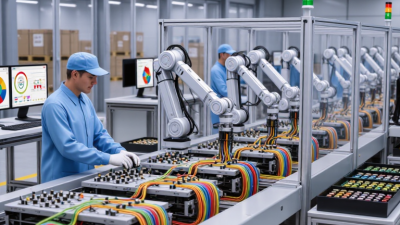
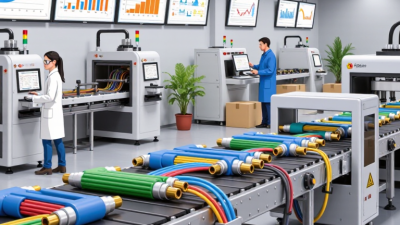
Choosing wire harness manufacturing equipment involves more than comparing purchase prices. Global buyers must match each machine to the harness design, production volume, and quality requirements. A line built for simple battery cables may not suit dense automotive assemblies with varied wire sizes and tight routing. Details matter.
A practical review starts with the full process: wire cutting and stripping, terminal crimping, splicing, marking, and electrical testing. Buyers should check supported wire ranges, changeover time, operator training, and compatibility with existing tools. For example, a crimping machine’s stated capacity is useful, but sample crimps and documented test results offer stronger evidence. Ask about calibration, spare parts, software updates, and service response times across regions. These details can affect production long after installation. Small delays add up.
This guide compares equipment types and explains what to examine before requesting quotes. It also considers automation levels, production flexibility, and the space needed for safe material flow. A specification sheet can still miss the feel of a real changeover, so, where possible, review a demonstration using representative wires and terminals. No option fits every factory. The most dependable choice is the one whose performance can be verified, whose limits are clear, and whose supplier can support the equipment over time.
Top Wire Harness Manufacturing Equipment for Global Buyers
Wire harness production equipment covers the steps that turn wire, terminals, and protective materials into tested assemblies. Typical systems cut and strip wire, apply labels, crimp terminals, and support connector insertion. The exact scope depends on wire sizes, terminal types, production volume, and harness layout. Small details matter.
A wire processor sets cut length and strip depth, while crimping equipment joins terminals to conductors with controlled force. Applicators and tooling must match the terminal and wire combination. For complex assemblies, work boards, clips, and routing guides help operators follow the drawing without twisting branches.
Marking systems can identify wires before assembly, reducing mix-ups at busy workstations. Testing equipment checks continuity, pin-to-pin connections, and, where specified, insulation performance. These checks help catch faults that visual inspection can miss.
Buyers should review changeover time, tooling availability, safety features, and service support alongside output rates. Ask for trials using representative wires and terminals, not just ideal samples. No setup is perfect. A rushed changeover can still introduce errors, so clear work instructions and routine calibration matter. The equipment performs best when its settings, materials, and inspection process are treated as one system.
A reliable wire harness line is built around machines that control each production step. Automatic cutting and stripping equipment measures wire to length, then removes insulation without nicking the conductor. For delicate wires, confirm strip settings with sample pieces; a clean-looking end can still hide damaged strands. Small differences matter. Crimping presses attach terminals with controlled force and repeatable positioning. Applicators should match the terminal and wire range, while pull testing helps verify connection strength. Simple checks catch costly rework.
Tips: Keep sample wires beside the setup station. Check cut length and strip depth when changing wire size. Record settings and inspection results, but review them when materials change. A saved setting is not always a correct setting.
After processing, assembly boards hold connectors and branches in place, helping technicians follow the harness layout. Markers and visual work instructions reduce routing errors, especially around tight bends and split points. Electrical testers then check continuity and confirm that circuits connect as intended.
A tester should use a clearly defined test plan; passing one check does not prove every mechanical detail is sound. Equipment selection depends on product variety, output volume, and operator skill.
One practical weakness is assuming automation removes the need for judgment. It does not. The process still needs careful setup, maintenance, and periodic review.
A useful equipment plan begins with the harness, not the machine catalog. A small batch of short sensor leads may need a precision wire cutter, a reliable stripping tool, and a bench crimper with changeable applicators. Operators can inspect each crimp closely. Keep it simple.
For large automotive harnesses, automated cut-and-strip equipment can reduce handling across thousands of repeat wires. Add automatic crimping when terminal types and wire sizes stay consistent. Mixed configurations may still require manual stations; frequent changeovers can erase automation gains. For sealed connectors, include seal insertion and pull-force testing in the process plan. Heavy-gauge power cables may need dedicated cutting, stripping, and joining equipment.
Production volume matters, but so does variation. A pilot run can reveal whether a machine handles insulation cleanly and places terminals consistently. Check setup time, tool-change frequency, and test-record storage before comparing quoted cycle speeds. A line that looks efficient on paper may struggle with short runs or frequent engineering changes. That is easy to overlook. Leave floor space for inspection, material staging, and maintenance access. Equipment choices are rarely perfect; build in room to adjust.
Equipment Selection by Harness Type and Production Volume
The chart shows an indicative automation-intensity score, from 1 (basic or manual equipment) to 5 (highly automated equipment). Higher-volume production generally supports automated cutting, stripping, crimping, and testing; complex harnesses may also need specialized processing and assembly equipment. Scores are a planning guide, not equipment capacity specifications.
Top Wire Harness Manufacturing Equipment for Global Buyers
Global Standards, Safety, and Regional Compatibility
Global buyers need harness equipment that fits both the production floor and the destination market. The IEA’s Global EV Outlook 2024 reports that electric car sales were expected to exceed 17 million in 2024, or more than one in five cars sold worldwide. Growing output brings more cable types, terminal designs, and quality checks. Adaptability matters.
Safety starts with the machine itself. IEC 60204-1 covers electrical equipment of machinery, while ISO 12100 sets out principles for machinery risk assessment and reduction. Buyers should check guarding, emergency stops, wiring diagrams, and safety controls against applicable local requirements. Standards are a starting point, not a complete compliance review. A tidy certificate file can still leave practical gaps.
Regional compatibility also affects daily operation. Confirm supply voltage and frequency, control-panel language, connector formats, and spare-part availability before purchase. Then test sample wires at the intended production speed. Measure strip length, crimp height, and pull strength, and keep the results. Small details matter. A machine that runs well on one cable may struggle with another. Factory acceptance tests can reveal issues, but only if they use representative materials and trained operators. This part is easy to underestimate.
| Equipment | Primary Function | Quality and Safety Considerations | Standards and Regulatory Context | Regional Compatibility Checks |
|---|---|---|---|---|
| Automatic wire cutting and stripping machine | Cuts wire to programmed lengths and removes insulation to specified strip lengths. | Verify supported conductor sizes, insulation types, cut-length tolerance, strip quality, guarding, and safe access to blades and feed rollers. | Machinery risk assessment can follow ISO 12100. Electrical equipment of machines is addressed by IEC 60204-1. | Confirm supply voltage and frequency, control language, measurement units, and availability of compatible blades and spare parts. |
| Terminal crimping press and applicator | Forms a mechanical and electrical crimp between a conductor and a terminal using a matched applicator and tooling. | Check applicator-to-terminal compatibility, crimp height, pull-force requirements, press guarding, and inspection or monitoring features. Validate settings against the terminal and wire specifications. | ISO 12100 and IEC 60204-1 are relevant to machinery risk and electrical equipment. Product-specific crimp acceptance criteria should come from the applicable customer or industry specification. | Confirm press force, tooling format, terminal reel dimensions, compressed-air requirements (if applicable), and local electrical supply. |
| Automatic seal and terminal insertion equipment | Places wire seals and inserts terminals into compatible connector cavities. | Assess insertion depth, seal orientation, terminal retention, changeover controls, and protection from moving tooling. Confirm process limits with connector and terminal documentation. | ISO 12100 provides a framework for machinery risk assessment; IEC 60204-1 addresses machine electrical equipment. | Check connector family and cavity configuration, seal and terminal supply format, recipe storage, and operator-language options. |
| Ultrasonic wire splicing machine | Joins compatible conductors through ultrasonic vibration and pressure without a conventional soldered joint. | Validate material, strand count, cross-section range, weld energy and pressure settings, joint resistance, and destructive-test results. Provide guarding and assess noise and vibration exposure. | ISO 12100 and IEC 60204-1 are relevant to general machine risk and electrical safety. Welding process acceptance should be defined by the application specification. | Confirm mains supply, cooling or compressed-air needs, compatible sonotrode and anvil tooling, and local service capability. |
| Wire harness electrical test system | Checks harness circuits for conditions such as continuity, opens, shorts, and specified resistance or insulation performance. | Set test limits for the product design; use suitable test voltages and procedures for connected components. Protect operators from electrical hazards and control test-program revisions. | IEC 60204-1 applies to electrical equipment of machines where relevant. Test methods and acceptance limits should follow the customer’s product requirements and applicable sector specifications. | Check connector fixtures, test-point configuration, data export formats, software localization, and calibration arrangements in the destination region. |
| Harness assembly board and fixtures | Supports manual routing, positioning, and assembly of wires and components to the harness layout. | Ensure the fixture reflects the approved harness drawing, provides clear routing and component locations, and minimizes awkward reaches and pinch points. | ISO 12100 can inform risk assessment for associated machinery and work processes. Applicable workplace ergonomics and safety requirements depend on the country and worksite. | Confirm units, drawing revision, work height, board size, mounting arrangement, and whether the layout suits local production flow. |
| Wire and harness marking system | Prints or applies identification labels, sleeves, or markers to support assembly, inspection, and maintenance. | Check print legibility, adhesion, abrasion resistance, and durability under the product’s expected environment. Match materials and print content to the approved design. | Label content and durability requirements are typically defined by the product design, customer requirements, and applicable sector rules rather than by one universal marking standard. | Confirm supported character sets, date and decimal formats, label stock availability, and any regional language or traceability requirements. |
| Machine electrical control panel | Houses machine control, protection, and power-distribution components. | Review protective bonding, overcurrent protection, wiring identification, enclosure suitability, emergency-stop design, and documented electrical drawings. | IEC 60204-1 covers electrical equipment of machinery. NFPA 79 is a US standard for industrial machinery electrical equipment; UL 508A concerns industrial control panels and is not a general certification for every machine. | Specify the destination market and verify applicable conformity and approval requirements. Confirm supply voltage, frequency, grounding system, and required documentation before purchase. |
Buyer note: Standards and conformity obligations depend on the machine design, intended use, and destination market. Confirm the current local requirements with a qualified compliance professional, and request risk assessments, electrical drawings, operating instructions, and applicable conformity documentation from the supplier.
Supplier evaluation should begin with real production samples, not a polished equipment demonstration. Check whether machines process your wire gauges, cut lengths, terminal types, and expected changeover volumes. Request documented cycle times, first-pass yield, calibration procedures, and operator training details.
The International Federation of Robotics’ World Robotics 2024 report recorded 541,302 industrial robot installations worldwide in 2023, a 10% year-on-year increase. This indicates broad automation growth, not a wire-harness-specific performance benchmark. Buyers should verify that automation suits their own product mix and order sizes. Small gaps matter.
Tips: Run several representative jobs before purchase, including a changeover between different wire specifications. Record setup time, crimp consistency, and reject rates. Ask suppliers to define service response times, spare-parts availability, preventive maintenance intervals, and software support in writing. A machine may meet its cycle-time target yet still create bottlenecks at inspection or material feeding. I would also ask for a clear handover plan; this step is easy to underestimate. Compare lifecycle costs alongside the purchase price, then revisit the assumptions after the first production month.