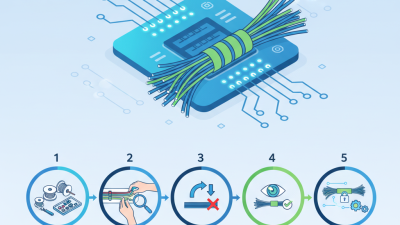
Why Choose Wire Harnesses for Global Sourcing?

Choosing wire harnesses for global sourcing is not simply a price decision. It affects assembly speed, product safety, repair work, and long-term supply stability. A well-built harness can arrive with labeled terminals, protective sleeving, and connectors ready for installation. That detail matters on a busy production line. Fewer manual connections can reduce wiring errors and shorten inspection time.

Global suppliers also provide access to specialized equipment, trained technicians, and broader manufacturing capacity. Experienced manufacturers may support crimp-force monitoring, automated cutting, continuity testing, and documented quality checks. These processes help buyers evaluate performance with evidence, not promises. Reliable sourcing also requires clear drawings, approved samples, material specifications, and traceable batch records. Independent audits and recognized management systems can strengthen confidence, although certifications alone never prove perfect workmanship.

Cost remains important, but it should not stand alone. Freight, tooling, customs procedures, lead times, engineering changes, and potential rework can alter the final calculation. A low quotation may become expensive after delays or inconsistent terminals. Not every supplier will fit every project. That is worth admitting. Communication gaps, time-zone differences, and unclear responsibility can still create avoidable problems. Careful buyers compare total value, verify compliance requirements in each market, and maintain realistic contingency plans. With disciplined evaluation, wire harnesses can support dependable production across borders while giving companies better control over quality, capacity, and growth.

Why Choose Wire Harnesses for Global Sourcing?

What Are Wire Harnesses and How Do They Support Global Sourcing?

Why Choose Wire Harnesses for Global Sourcing?

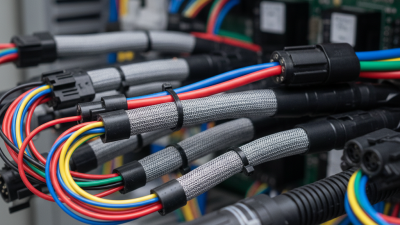
A wire harness is an organized assembly of wires, terminals, connectors, sleeves, and protective coverings. It carries power and signals through equipment in a controlled, repeatable way. Instead of routing loose wires during final assembly, manufacturers receive a tested unit ready for installation. This can reduce wiring time and prevent avoidable connection errors.

For global sourcing, standardization is especially valuable. Suppliers can follow shared drawings, terminal specifications, color codes, and inspection procedures. A harness may arrive at a factory in a sealed package, labeled by model and installation position. Production teams then spend less time identifying individual wires. Clear documentation also supports communication across different languages, time zones, and manufacturing systems. It is a practical advantage.

However, a wire harness is not automatically a reliable sourcing solution. Small connector changes can affect fit, electrical performance, or safety. Material availability may also vary between regions. Production reviews should check conductor size, insulation quality, pull-force results, continuity, and packaging conditions. Samples need testing under real assembly conditions, not only on a clean inspection bench. This step is sometimes underestimated. A design may look correct, yet fail when workers bend it around a tight frame. Suppliers should maintain traceable records and report deviations honestly, even when the issue seems minor. That discipline builds confidence between engineering, purchasing, and production teams.

Which Industries and Applications Use Globally Sourced Wire Harnesses?

Globally sourced wire harnesses serve industries where reliable power and signal routing are essential. Automotive production remains a major user, especially as vehicles add sensors, cameras, battery systems, and charging circuits. The International Energy Agency reported more than 17 million electric cars were sold worldwide in 2024. Each vehicle requires carefully engineered harnesses for high-voltage and low-voltage systems. Small routing errors can create heat, noise, or difficult repairs.

Industrial automation Industrial automation is another important application. The International Federation of Robotics recorded about 542,000 industrial robot installations in 2023. Robots, conveyors, control cabinets, and vision equipment all depend on organized wiring.

Specialized applications Medical equipment also uses harnesses in imaging systems, patient monitors, and laboratory instruments. Aerospace applications demand lighter materials, traceability, and strict inspection records. Consumer electronics, renewable-energy equipment, and telecommunications add further demand, although their specifications differ sharply.

Tips: Define voltage, temperature, bending, shielding, and connector requirements before requesting quotations. Ask suppliers for sample approval, material traceability, and inspection data. Global sourcing may reduce cost, but freight delays and communication gaps remain real risks.

I have seen projects focus too heavily on unit price. That approach often misses tooling changes, testing, and rework. A regional backup supplier can improve resilience.

Still, dual sourcing is not automatically safer; inconsistent crimp standards can create new problems. Use IPC/WHMA-A-620 as a practical quality reference, then verify requirements against the final application.

How Do Wire Harnesses Improve Manufacturing Efficiency and Cost Control?

Wire harnesses improve manufacturing efficiency by converting many loose wires into one tested, installation-ready assembly. Operators spend less time measuring, cutting, stripping, and routing cables on the production line. Errors become easier to detect before final assembly. That matters.

Deloitte’s 2023 Global Smart Manufacturing Survey found that 86% of manufacturers view smart manufacturing as a major competitiveness driver. Harness suppliers can support this shift through digital work instructions, barcode traceability, and recorded electrical tests. These controls create a clearer production history. They also help factories compare defect rates across suppliers and batches. However, digital tracking alone cannot repair poor drawings or unclear specifications.

Cost control comes from more than lower piece prices. Standardized harness designs reduce assembly time, rework, and material waste. The IPC/WHMA-A-620 standard provides widely recognized acceptance criteria for cable and wire harness assemblies, helping buyers define quality before production begins. McKinsey research on advanced manufacturing has reported potential conversion-cost reductions of 15% to 30% in suitable operations. Results vary, though. Freight distance, tooling changes, minimum order quantities, and inspection requirements can reduce the savings. A practical sourcing plan should request first-article samples, test records, and a transparent breakdown of labor and materials. Cheap is not always efficient.

What Quality Standards Should Global Buyers Evaluate?

Global wire-harness sourcing depends on measurable quality, not attractive quotations. McKinsey’s Global Supply Chain Leader Survey reported that 92% of companies experienced supply-chain disruption in recent years. This finding makes supplier qualification essential. Buyers should request ISO 9001 certification, documented process controls, and traceable material records. For automotive projects, IATF 16949 alignment deserves close review. Certification alone is not enough.

The IPC/WHMA-A-620 standard defines acceptance criteria for crimping, soldering, insulation, labeling, and mechanical assembly. Ask suppliers to show real inspection records. Look for pull-force results, conductor cross-section checks, continuity testing, and high-voltage tests. A finished harness should match the drawing, including terminal orientation and branch length. Small errors matter. One reversed connector can delay an entire installation.

The Quality Planning 2024 industry survey from ASQ found that many organizations still struggle to convert quality data into preventive action. Buyers should therefore evaluate corrective-action reports, not only final inspection rates. Request defect-per-million data, first-pass yield, and process capability results for critical dimensions. Factory audits should include crimp-height measurement and sample-based destructive testing. My own review experience suggests that supplier records can look complete while omitting recurring defects. That gap deserves honest questioning. A practical scorecard should weight process evidence, tester calibration, operator training, and response speed.

How Can Businesses Select and Manage a Reliable Global Supplier?

Why Choose Wire Harnesses for Global Sourcing?

How Can Businesses Select and Manage a Reliable Global Supplier?

A reliable wire harness supplier needs more than a low quotation. Review process capability, material traceability, testing records, and engineering response time. Request samples built from the same terminals, wires, seals, and tooling used in production. Inspect crimp height, pull force, continuity, insulation resistance, and labeling accuracy. Small defects can become expensive assembly delays.

Use a supplier scorecard with measurable evidence. Quality should include defect rates, corrective-action speed, audit results, and ISO 9001 certification. The ISO Survey 2023 recorded more than 1.2 million ISO 9001 certificates worldwide, but certification alone proves limited capability. Ask for recent audit findings. No scorecard is perfect. Teams sometimes overvalue paperwork and undervalue shop-floor discipline.

Global logistics also needs careful control. The World Bank’s 2023 Logistics Performance Index assessed 139 economies through international supply-chain professionals. Its findings show significant differences in customs, infrastructure, tracking, and delivery reliability. Select backup sources for critical terminals and specialized components. Confirm production capacity before demand rises. UNCTAD’s Review of Maritime Transport 2023 states that maritime shipping carries over 80% of global merchandise trade by volume. One delayed container can interrupt an entire harness program. Set safety stock by risk, not habit. A spreadsheet can still lie. Monthly reviews should compare forecast changes, shipment performance, quality escapes, and open corrective actions. Keep communication direct, documented, and technically specific.

Why Choose Wire Harnesses for Global Sourcing? - How Can Businesses Select and Manage a Reliable Global Supplier?

Evaluation Dimension Practical Benchmark or Target Why It Matters in Global Sourcing Evidence to Request from the Supplier Recommended Management Action
Total Landed Cost Compare material, labor, tooling, packaging, freight, duties, inspection, and inventory costs rather than unit price alone. A lower quoted price can be offset by transportation, customs, quality, and expedited-shipping expenses. Itemized quotation, tooling ownership terms, freight assumptions, duty classification, and price-adjustment formula. Review landed cost quarterly and separate one-time tooling charges from recurring production costs.
Standard Production Lead Time Approximately 4–8 weeks for established designs; approximately 8–14 weeks for new tooling or complex assemblies. Long-distance transportation and customs clearance increase the effect of production delays. Capacity plan, tooling schedule, historical order-to-ship data, and documented escalation procedure. Set separate targets for sample approval, tooling completion, first production, and repeat orders.
On-Time Delivery Target at least 95% on-time delivery, measured against the confirmed shipment date. Reliable delivery reduces production stoppages, air-freight charges, and emergency inventory transfers. The previous 6–12 months of delivery performance, backlog report, and root-cause records for late orders. Track monthly OTD and require a corrective-action report when performance falls below the agreed threshold.
Electrical and Assembly Quality 100% continuity and polarity testing where applicable; zero open, short, or miswire defects in released shipments. A single wiring error can cause field failure, safety risk, rework, or a production-line stoppage. Control plan, test-system calibration records, inspection instructions, sample test reports, and nonconformance history. Approve a product-specific control plan before mass production and verify test coverage during process audits.
Crimp and Terminal Integrity Crimp height, crimp width, bellmouth, conductor brush, and pull-force results must remain within the approved terminal specification. Improper crimping can create intermittent resistance, overheating, vibration failure, or terminal pull-out. First-article crimp studies, pull-force records, applicator maintenance logs, and periodic cross-section analysis. Define inspection frequency and require documented approval after terminal, wire, or tooling changes.
Defect Performance Use an agreed target such as fewer than 500 defective parts per million for mature, stable production; apply stricter limits to critical features. A common metric enables objective comparison among suppliers and highlights process deterioration early. Incoming inspection data, customer complaint records, process capability studies, and corrective-action reports. Use PPM, first-pass yield, and repeat-defect rates together rather than relying on one quality indicator.
Capacity and Business Continuity Maintain documented capacity for normal demand plus forecasted peaks; avoid depending on one production line or one critical sub-supplier. Labor shortages, power interruptions, raw-material constraints, and regional disruptions can affect overseas supply. Machine list, labor plan, backup-facility information, material-risk register, and business-continuity plan. Qualify an alternate source for high-risk harnesses and review capacity before seasonal demand increases.
Traceability Trace finished harnesses to production date, lot, operator or work center, wire batch, terminal batch, and test record. Traceability limits the scope and cost of containment when a material or process issue is discovered. Sample labels, electronic production records, material certificates, and retrieval demonstration during an audit. Include minimum traceability fields and record-retention periods in the quality agreement.
Engineering Change Control No material, terminal, tooling, process, site, or sub-supplier change without written customer approval before implementation. Uncontrolled changes can alter fit, electrical performance, compliance status, and product life. Engineering-change procedure, approval workflow, revision history, and examples of previous change notifications. Require advance notification, validation samples, and updated drawings before releasing revised production.
Compliance and Responsible Sourcing Maintain a quality-management system appropriate to the application and provide material declarations required by the destination market. Regulatory gaps may cause customs delays, customer rejection, product recalls, or restricted market access. Quality certificates, material declarations, conflict-minerals statements where applicable, labor-policy records, and audit results. Map every requirement to the destination market and include compliance documents in the supplier approval checklist.
Inventory and Logistics Planning For long-distance supply, evaluate a practical buffer of approximately 2–4 weeks for critical items after analyzing demand variability and transport risk. A controlled buffer protects production without creating excessive obsolete inventory. Forecast accuracy, minimum order quantities, packaging configuration, shipment history, and agreed Incoterms. Use rolling forecasts, defined firm-order windows, and periodic safety-stock recalculation.
Supplier Audit and Review Complete an initial technical and process audit, followed by risk-based reviews at least annually for critical suppliers. Regular reviews confirm that documented procedures are being followed in actual production. Audit scorecard, open corrective actions, process-flow diagram, control plan, and production-floor records. Use weighted scoring for quality, delivery, cost, capacity, compliance, and responsiveness; link poor scores to improvement plans.
Communication and Escalation Acknowledge urgent quality or delivery issues within one business day and provide a containment plan promptly. Time-zone differences and language barriers can amplify the impact of unresolved issues. Named account manager, technical contact, escalation chart, response-time policy, and meeting cadence. Hold monthly operational reviews and quarterly business reviews using the same performance dashboard.

Note: The benchmarks shown are practical procurement and supplier-management reference ranges. Final requirements should be confirmed against the product drawing, applicable electrical and safety standards, customer specifications, destination-market regulations, and agreed quality documentation.