Top 10 Harness Assembly Manufacturers for Global Buyers

Choosing a harness assembly manufacturer is not simply a search for the lowest unit price. A dependable partner must turn drawings, approved components, and production schedules into consistent cable assemblies. Buyers should examine crimp quality, wire identification, continuity testing, traceability, and change-control practices. These details matter. A poorly supported design change can affect fit, function, and delivery timing.

Lean manufacturing expert Shigeo Shingo is often credited with saying, “The most dangerous kind of waste is the waste we do not recognize.” That principle applies to harness assembly: hidden rework, unclear specifications, and weak process controls can quietly raise costs. Strong manufacturers make their processes visible. They can explain how operators verify terminal insertion, how test results are recorded, and how production issues reach the customer. Ask for evidence, not just confident promises.

This Top 10 guide helps global buyers compare manufacturers against practical needs, including engineering support, production capacity, quality systems, communication, and experience with relevant applications. A large factory is not automatically the right choice. Nor is a nearby supplier always the easiest partner. The best fit depends on product complexity, forecast stability, required documentation, and service expectations. No shortlist is perfect; public information may not reveal every production weakness. Treat each profile as a starting point, then confirm capabilities directly, review sample assemblies, and clarify acceptance criteria before committing.
Top 10 Harness Assembly Manufacturers for Global Buyers

Wire Harness Assemblies: Core Components, Functions, and Applications

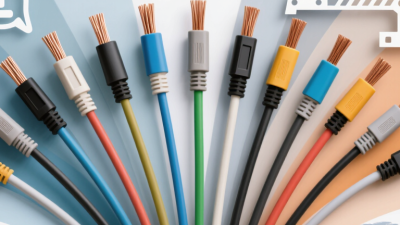
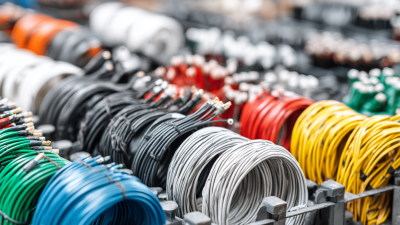
A wire harness assembly groups conductors, terminals, connectors, seals, and protective coverings into a routed electrical system. Each conductor carries power or a signal between defined points. Terminals create contact at connection points, while connector housings keep contacts aligned and help prevent accidental separation. Braided sleeves, corrugated tubing, or tape can protect wires from abrasion, heat, and moisture. Small details matter.

Harnesses reduce loose wiring and make installation more repeatable. In vehicles, they connect sensors, lighting, control units, and power systems. Industrial equipment uses them to link motors, switches, and operator panels. Medical and communications devices may rely on smaller assemblies with tightly controlled routing and identification. The right design depends on current, voltage, temperature, vibration, and the space available. A harness that fits on a clean drawing may be awkward to install around a sharp bracket. That is easy to overlook. Clear labeling, secure strain relief, and sensible branch lengths support inspection and maintenance. Prototype testing can reveal routing conflicts that specifications alone miss, and sometimes the first layout still needs revision.

Wire Harness Assemblies: Standard AWG Conductor Cross-Section Areas

Conductor cross-sectional area affects a harness wire’s electrical resistance and current-carrying capability. The values shown are nominal areas for standard AWG sizes; actual wire selection depends on factors such as current, wire length, insulation temperature rating, installation conditions, and applicable standards. A lower AWG number indicates a larger conductor.

Supplier Quality Benchmarks: IPC/WHMA-A-620E and IATF 16949

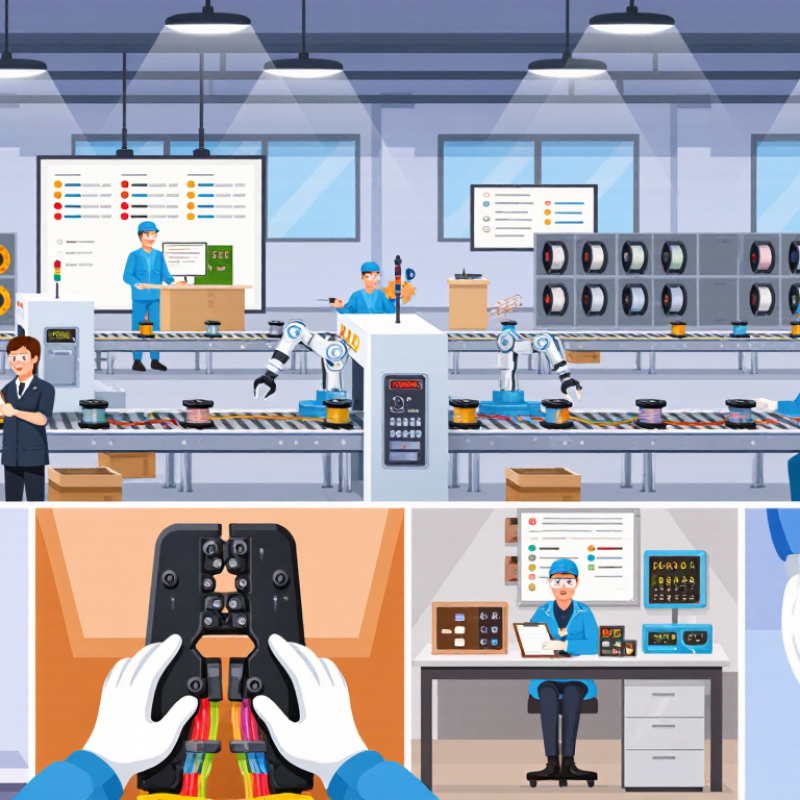
For global buyers, supplier quality should be visible on the production floor, not only in a presentation. IPC/WHMA-A-620E sets workmanship acceptance criteria for cable and wire harness assemblies. Buyers can check whether inspectors use the relevant criteria for crimping, soldering, insulation damage, and wire routing. Ask to see sample inspection records and how defects are classified. Details matter. A standard does not replace product-specific drawings or agreed acceptance requirements.

IATF 16949 addresses the quality management system used in automotive supply chains. It emphasizes process control, risk review, corrective action, and traceability. During a supplier review, follow one harness lot from incoming wire labels to final inspection records. Check whether crimp tooling is verified, process changes are approved, and corrective actions include evidence of effectiveness. No audit catches everything. A certificate is a useful reference, but buyers should confirm its current scope and assess the actual production site. Requirements can differ by application, and even a well-documented process may leave gaps when operators face unusual variation. Ask how those gaps are found, recorded, and resolved.

Top 10 Harness Assembly Manufacturers for Global Buyers

Supplier Quality Benchmarks: IPC/WHMA-A-620E and IATF 16949

This is a supplier evaluation framework, not a verified ranking of named manufacturers. IPC/WHMA-A-620E defines workmanship requirements and acceptance criteria for cable and wire-harness assemblies; it is not, by itself, a supplier certification. IATF 16949 is an automotive quality management system standard. Verify certificate validity, site, scope, and customer-specific requirements directly with each supplier.

No. Supplier Benchmark What Buyers Should Evaluate Evidence to Request Practical Qualification Check
1 IPC/WHMA-A-620E workmanship control Ability to build and inspect wire harnesses to the agreed acceptance criteria, including workmanship requirements for terminals, splices, insulation, routing, and cable preparation. Controlled work instructions, inspection criteria, operator training records, and sample inspection results referencing the contractually agreed standard and revision. Specify the applicable product class and acceptance requirements in the drawing, purchase order, or quality agreement; do not assume one class applies to every application.
2 IATF 16949 quality system Whether the manufacturing site holds a current IATF 16949 certificate applicable to the relevant automotive activities and location. Current certificate, certification-body details, site address, scope, and any applicable customer-specific requirements. Check certificate status and scope with the issuer or an official certification-validation channel; a certificate for another site does not establish coverage for the proposed production location.
3 Product and process traceability Ability to link finished assemblies to relevant production records, components, inspection results, and applicable revision levels. Example traveler or electronic lot record, material-lot links, date or shift records, and a documented retrieval procedure. Ask the supplier to demonstrate traceability for a sample lot from finished product back to incoming materials and production records.
4 Electrical test coverage Use of electrical tests appropriate to the design and risk, such as continuity, short-circuit, and specified insulation or high-potential tests. Test plans, approved test limits, equipment calibration records, test results, and procedures for handling failed units. Confirm that test limits and methods match the approved drawing and product requirements; not every harness requires the same test set.
5 Crimping and termination process control Control of wire preparation, terminal and applicator setup, crimp process parameters, and inspection of completed terminations. Applicator or tooling maintenance records, setup approval, crimp-height or other defined checks, pull-test records where specified, and defect reaction plans. Review the supplier’s control plan against the wire-terminal combination and the applicable customer or product specification.
6 Engineering change management Controls for customer-approved changes to drawings, bills of material, tooling, test programs, and manufacturing instructions. Revision-control procedure, change log, approval records, and evidence that obsolete documents are removed from production use. Run a sample change through the process and verify that purchasing, production, inspection, and test documentation are updated consistently.
7 Supplier and component management How the assembler controls purchased wire, terminals, connectors, seals, labels, and other specified components, including approved-source requirements. Approved supplier controls, incoming inspection criteria, material certificates where required, and nonconforming-material records. Confirm component part numbers, approved sources, and substitution rules against the customer-approved bill of materials.
8 Nonconformance and corrective action Ability to contain defects, investigate causes, implement corrective actions, and verify their effectiveness. Redacted examples of nonconformance reports, containment records, root-cause analysis, corrective actions, and effectiveness checks. Assess whether the response addresses the process cause and prevents recurrence, rather than only sorting or reworking affected units.
9 Production capacity and continuity Fit between the supplier’s available equipment, trained personnel, facility plan, and the buyer’s forecast, delivery, and business-continuity needs. Capacity assumptions, production-flow overview, contingency plans, and a clear description of any subcontracted operations. Validate capacity using the actual product mix, changeover needs, inspection steps, and forecast profile rather than a generic maximum-output figure.
10 Global delivery and compliance readiness Ability to meet the destination market’s documentation, packaging, labeling, shipping, and applicable product-compliance requirements. Export and shipping process details, packaging specifications, labeling samples, and compliance documentation required for the specific product and market. Agree on Incoterms, delivery points, packaging, required records, and responsibility for market-specific compliance before production release.

Top 10 Harness Assembly Manufacturers for Global Buyers

Global buyers comparing harness assembly manufacturers should look beyond unit price. The right supplier can document wire specifications, terminal compatibility, crimp settings, and inspection results for each build. Ask for sample assemblies and process records, not just a capability sheet. Fit matters. A connector that seats poorly can delay an entire production line.

Market demand makes this choice more consequential. Grand View Research valued the global automotive wiring harness market at about US$47.4 billion in 2023 and projected 4.7% annual growth from 2024 to 2030. The International Energy Agency reported nearly 14 million electric cars sold in 2023, around 18% of global car sales. Electrification brings different packaging and routing demands, so buyers should check a manufacturer’s experience with high-voltage assemblies, where relevant, and its change-control process.

For a practical shortlist, compare production capacity, traceability, testing coverage, and lead-time consistency across suppliers. Request evidence of continuity testing and clear handling procedures for drawing revisions. A neat sample is useful; repeatability across shifts matters more. Also ask how the manufacturer manages shortages of terminals or wire, and whether backup processes are tested. Small defects travel. Published market forecasts cannot tell you which factory will meet your needs, and I would not treat a large capacity claim as proof. Verify performance with a pilot order and review the results together.

Compare Suppliers by Capacity, Certifications, Lead Times, and Regions

A useful harness supplier comparison starts with capacity, not a headline number. The OICA reported 93.5 million motor vehicles produced worldwide in 2023, while the IEA estimated nearly 14 million electric-car sales that year. These figures show the scale and changing mix of demand, but they do not guarantee a supplier can absorb your specific program. Ask for monthly output by process, current line utilization, tooling capacity, and a documented ramp plan. Request evidence of ISO 9001 or IATF 16949 certification where relevant, and check whether workmanship follows IPC/WHMA-A-620. A certificate alone is not proof of stable production.

Lead times deserve the same scrutiny. Compare quoted sample, tooling, and production schedules, then ask which components drive each date. Copper terminals, connectors, and special-order cable can create very different risks. Request recent on-time delivery data and a clear escalation process. Regions matter, too: nearby assembly may shorten transit, while a second production site can provide resilience. Yet extra sites do not automatically mean interchangeable processes. Verify approval status, test equipment, traceability, and capacity at each location. A spreadsheet can still hide a weak assumption. Ask suppliers to explain their figures, especially when capacity looks unusually generous or lead times seem unusually short.

Buyer Validation: UL 758 Materials, Traceability, and Electrical Testing

For global buyers, a harness sample is only the beginning of supplier validation. Check that the wire’s UL 758 documentation matches its actual construction, including insulation type, temperature rating, and voltage rating. A familiar-looking jacket is not proof. Compare part numbers and certification records, then confirm that substitutions require buyer approval.

Traceability should connect incoming wire lots to finished harnesses. Ask for reel or lot numbers, inspection dates, and production records that can be retrieved by shipment or work order. Check whether labels remain readable after handling, and whether a cut length can still be traced to its source. Paperwork can look complete and still leave gaps. That deserves a second look.

Electrical test plans should match the drawing and intended application. They may include continuity checks, insulation resistance, or dielectric withstand testing, with clear limits and recorded results. Ask how failed units are isolated and how test equipment calibration is tracked. A single pass report is less useful without the tested quantity, date, and acceptance criteria. Small details matter, though they are easy to overlook during a fast sourcing review.